Embracing the Art of Handbrushed Typography: The Wonder of Expressive Fonts
Typography has always been a bridge between message and emotion. Among the many styles available, handbrushed fonts occupy a special place—they feel immediate, personal, and alive. The Wonder handbrushed font exemplifies this spirit, offering designers a way to inject authenticity into digital and print work. But what makes handbrushed typography so compelling, and how can you use it effectively in your projects? This article explores the qualities, practical applications, and considerations of working with handbrushed fonts, with a natural focus on what Wonder brings to the table.
What Defines a Handbrushed Font?
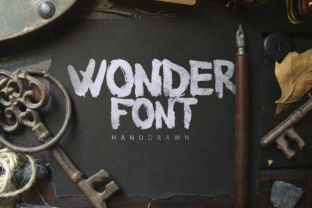
A handbrushed font mimics the look of lettering created with a brush and ink or paint. Unlike standard serif or sans-serif typefaces, these fonts retain subtle irregularities—varying stroke widths, slight wobbles in baseline, and edges that feel organic rather than mathematically perfect. The Wonder font captures this beautifully, with strokes that feel both deliberate and spontaneous. Each character seems to carry the pressure and speed of a real brush, making the text look as if it were painted by hand moments ago.
This aesthetic warmth is hard to achieve with mechanical fonts. When you see a handbrushed typeface, you instinctively connect it with craft, art, and human touch. That emotional layer is exactly why brands, content creators, and designers turn to styles like Wonder when they want to stand out in a sea of polished uniformity.
Key Qualities of Handbrushed Typography
Understanding the characteristics of a handbrushed font helps you choose the right one for your context. Here are the most important qualities to look for:
- Texture and depth – Real brushwork leaves texture. Wonder includes subtle dry-brush effects and ink pooling that give letters a tactile presence.
- Variable stroke width – Unlike uniform vector lines, handbrushed letters naturally thicken and thin, adding rhythm and emphasis to words.
- Imperfect alignment – Slight ascender and descender variations make the text feel human, not robotic. This is a feature, not a flaw.
- Expressive flourishes – Many handbrushed fonts include alternate characters, swashes, or ligatures that let you customize the look. Wonder offers a generous set of stylistic alternates for exactly this purpose.
- Limited character sets in some cases – While professional handbrushed fonts often support multiple languages, it is wise to check. Wonder covers a broad Latin character set, making it suitable for international projects.
These qualities combine to produce a font that feels alive. Wonder in particular manages to balance raw energy with readability, which is a rare achievement in handbrushed design.
Where Handbrushed Fonts Fit in Modern Workflows
You might wonder whether a style rooted in traditional brushwork has a place in today’s digital-first world. The answer is a clear yes—handbrushed typography thrives precisely because of the contrast it offers. When every brand uses clean sans-serifs, a hand-lettered headline cuts through the noise. The Wonder font has found its way into branding, packaging, web design, social media, and even video titles because it delivers that necessary differentiation.
Branding and Logo Design
Startups, artisan businesses, and creative agencies often need a logo that feels approachable and original. A handbrushed font like Wonder can serve as the primary logotype or be paired with a simpler secondary typeface for balance. The irregular strokes suggest craftsmanship, which works especially well for coffee shops, bakeries, studios, and boutique services. When you use Wonder in a logo, the brand name looks like it was painted by the founder—that story is powerful.
Social Media and Content Marketing
Scrolling through Instagram or LinkedIn, users pause for content that feels real. Handbrushed typography in quote cards, announcements, or campaign headers creates a human moment. Wonder excels at this because its characters remain legible even at medium sizes, while still carrying that artistic flair. Pair it with a clean sans-serif for body text, and your visual hierarchy becomes both clear and memorable.
Packaging and Print Collateral
Product packaging is a tactile medium by nature. A handbrushed font on a label or box reinforces the idea of something handmade or small-batch. Wonder looks stunning on kraft paper, matte finishes, or even foil-stamped covers. For print projects like menus, posters, or brochures, the font adds personality without overwhelming the information. Because Wonder includes multiple weights (or stylistic variants), you can create contrast between headings and subheadings without switching typefaces.
Web and UI Design
Yes, handbrushed fonts work online too. The key is restraint—use them for hero headlines, call-to-action buttons, or decorative elements rather than body copy. Wonder renders well on screens, especially when paired with proper letter-spacing and line-height adjustments. Web designers have used it successfully for landing pages, event registration sites, and portfolio headers. The font’s organic outlines add warmth to otherwise minimal layouts without breaking the user experience.
Practical Benefits of Choosing Wonder
Beyond aesthetics, choosing a specific handbrushed font like Wonder comes with practical advantages. Here are some benefits that designers and project owners frequently mention:
- Versatility across media – Wonder works in both print and digital environments because its stroke contrast is balanced enough to hold up at different resolutions.
- Time savings – Instead of commissioning custom hand-lettering for every project, you can use a quality handbrushed font and apply stylistic alternates to keep it fresh.
- Consistency with flexibility – A font gives you a controlled system of characters, but Wonder’s alternates and swashes let you avoid the “cookie-cutter” look. You can change the feel of a word without redesigning the entire composition.
- Licensing that fits real use cases – Many handbrushed fonts offer commercial licenses that cover web, print, and app usage. Check the specifics for Wonder if you plan to use it in a product or distributed material, but in most cases it is straightforward.
- Emotional impact without clutter – A single handbrushed headline can carry the entire mood of a piece. Wonder does not need extra ornamentation because the letterforms themselves are expressive.
Important Considerations Before Using a Handbrushed Font
No typeface is perfect for every situation. Being aware of potential challenges helps you make better design decisions. Here are common factors to evaluate before committing to a handbrushed font like Wonder:
- Readability at small sizes – Because handbrushed letters have variable strokes, they can become hard to read below a certain size. Use Wonder for headlines and larger text, not for long paragraphs or tiny footnotes.
- Pairing with other fonts – A handbrushed font needs a complementary typeface to handle body content and secondary information. Sans-serif fonts like Open Sans, Lato, or Montserrat work well with Wonder because they provide visual rest and contrast.
- Audience expectations – In highly formal or corporate contexts, handbrushed type may feel out of place. Legal documents, financial reports, or academic papers are not suitable. Wonder shines in creative, lifestyle, and artisanal settings—know your audience.
- File size and performance – Especially for web use, a handbrushed font with many alternates can have a larger file size. Use font subsetting or load only the characters you need to keep performance smooth.
- Licensing restrictions – Always verify whether the license covers your intended use. Some handbrushed fonts restrict embedding in apps or limit the number of page views for web use. Wonder typically offers a standard commercial license, but it is best to confirm directly.
Recommendations for Getting the Most Out of Wonder
If you decide to incorporate Wonder into your design toolkit, here are some practical recommendations from professionals who use it regularly:
- Experiment with alternates – Don’t settle for the default letterforms. Open the glyph palette and try different versions of the same character. The Wonder font includes several alternates for letters like “a,” “e,” “g,” and “y” that can completely change the feel of a word.
- Adjust tracking and leading – Handbrushed fonts often benefit from a little extra letter-spacing, especially in all-caps settings. Give the letters room to breathe. Similarly, generous line-height keeps the texture from feeling cramped in multi-line headlines.
- Layer with textures – For print or digital backgrounds, placing Wonder over a subtle paper or grunge texture amplifies the handbrushed illusion. Even a low-opacity grain overlay can make the font feel more authentic.
- Use color strategically – The font works beautifully in single-color treatments, but also supports gradients and shadows when used carefully. In social media graphics, a bold color paired with Wonder can create an instant focal point.
- Combine with hand-drawn elements – If you have custom illustrations, icons, or doodles, Wonder will align naturally with them because both share a handcrafted origin. This consistency strengthens the overall design language.
Real-World Scenarios Where Wonder Shines
To give you a clearer picture, here are a few scenarios where designers have chosen Wonder with great results:
A local pottery studio needed a logo and website header that reflected the handmade nature of their work. Using Wonder for the studio name, paired with a soft serif for body text, they created a brand identity that felt warm, credible, and rooted in craft. The irregular brush strokes echoed the organic shapes of the pottery itself.
A travel blogger redesigned their site to emphasize storytelling and personal experience. They used Wonder for post titles and quote callouts, while the main content remained in a readable sans-serif. The contrast signaled “this is the human part” to readers, increasing time on page and engagement with the narrative.
A craft beer label needed to stand out on crowded shelves. The design team used Wonder for the beer name, layered over a textured background that resembled kraft paper. The result was a label that looked like it was hand-painted in small batches, which matched the brand’s story of small-scale brewing.
A wedding invitation suite used Wonder for the couple’s names and the main event details. The font’s romantic, flowing quality suited the formal yet personal tone. Printed on cotton paper with letterpress, the letters appeared almost embossed, and guests immediately recognized the care behind the design.
Final Observations on Handbrushed Typography and Wonder
Handbrushed fonts are not a passing trend—they fulfill a lasting need for human expression in a digital world. The Wonder font embodies this need by combining the authenticity of real brushwork with the practicality of a modern typeface. Whether you are a designer building a brand, a content creator seeking visual personality, or a business owner wanting to connect with customers on a more emotional level, handbrushed typography offers a direct path to that goal.
As with any design tool, success comes from understanding both the strengths and the limitations. Use Wonder where it can shine—in headlines, logos, packaging, and hero imagery—and support it with clean, restrained elements elsewhere. When you treat a handbrushed font as a deliberate accent rather than a universal solution, it rewards you with impact that feels earned, not forced.
The next time you start a project and want to communicate warmth, craftsmanship, or individuality, consider reaching for a handbrushed font. And if you want one that balances character with clarity, Wonder is a choice that will serve you well across formats, media, and years of evolving creative work.