AZ Texture and the Expressive Power of Brushed Handwritten Script Fonts in Modern Visual Communication
In the crowded landscape of digital design, brands and creators constantly seek ways to stand out. While clean sans-serif typefaces and polished vector graphics once defined professionalism, a noticeable shift has occurred toward authenticity, imperfection, and tactile richness. At the heart of this movement lies AZ Texture—a design philosophy that celebrates surface, grain, and material feel—and its natural partner, the brushed handwritten script font. Together, they create compositions that feel human, immediate, and deeply layered.
This article explores how AZ Texture manifests in typography and visual identity, what makes brushed handwritten scripts so compelling, and how you can harness their combined potential across real-world projects. Whether you design marketing materials, build educational resources, or run a small business, understanding these elements will elevate your visual storytelling.
What AZ Texture Brings to Typography and Design
Texture in graphic design refers to the perceived surface quality of an object or visual element. AZ Texture extends this concept beyond mere visual grit. It encompasses the subtle irregularities, tonal variations, and organic imperfections that make a design feel tangible. When applied to typography, AZ Texture transforms letters from sterile symbols into expressive artifacts.
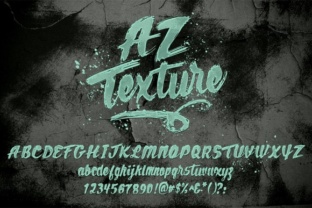
A brushed handwritten script font exemplifies AZ Texture at its finest. Each stroke carries the memory of a brush—the pressure variation, the uneven ink distribution, the occasional splatter or dry-brush effect. These imperfections are not flaws; they are the texture that communicates authenticity. Designers who embrace AZ Texture understand that a perfectly uniform letterform often feels cold, while a slightly rough edge invites the viewer to connect.
The synergy between AZ Texture and brushed scripts works because both prioritize the handmade over the mechanical. When you see a headline set in a dry-brush script against a textured paper background, your brain registers it as genuine. This tactile illusion matters more than ever in an era of digital saturation.
Defining Characteristics of Brushed Handwritten Script Fonts
Not all script fonts are created equal. A brushed handwritten script font possesses specific traits that align with AZ Texture principles:
- Varied stroke width: Unlike consistent mechanical lines, brush scripts swell and taper naturally, mimicking the physics of bristles against paper.
- Organic baseline fluctuations: Letters do not sit on a perfectly flat line. They dance slightly, giving the text a spontaneous rhythm.
- Texture within characters: The ink fill may have subtle grain, lighter patches, or edge roughness that suggests real paint movement.
- Contextual alternates and ligatures: Quality brush fonts offer multiple character variations to avoid repetition and preserve a natural hand lettering feel.
- Slight inconsistency: No two letters are mathematically identical, which mirrors the reality of handwriting with a physical brush.
These characteristics make brushed scripts ideal for projects where AZ Texture and human warmth are priorities. They excel in headlines, logos, packaging, and any context where typography needs to carry emotion.
Why Brushed Scripts Resonate Across Audiences
The appeal of a brushed handwritten script font cuts across demographic lines. Professionals see it as a way to humanize corporate communications. Creators use it to inject personality into personal brands. Educators find it useful for materials that need to feel approachable rather than institutional. Researchers studying visual perception note that textured typography triggers stronger emotional responses than smooth, uniform fonts.
Consider a coffee shop menu. A clean Helvetica listing of lattes and cappuccinos feels efficient but sterile. Replace that with a menu set in a bold brush script on kraft paper, and suddenly the brand feels artisanal, handcrafted, and authentic. That is AZ Texture in action—the texture of the lettering communicates craftsmanship before the customer reads a single word.
For business owners, this translates directly into engagement. A logo that uses a brushed handwritten script font with visible texture tells potential customers: We care about details. We value authenticity. We are not a faceless corporation. This emotional shorthand is powerful and, when executed well, instantly differentiates a brand from competitors who rely on stock typography.
Practical Use Cases for AZ Texture and Brushed Scripts
Understanding the theory is valuable, but applying it effectively requires context. Here are several real-world scenarios where AZ Texture combined with brushed handwritten script fonts delivers exceptional results:
- Brand identity for creative industries: Photographers, artists, florists, and boutique agencies use brush scripts to signal their creative nature. The texture reinforces the handmade quality of their work.
- Product packaging for artisanal goods: Honey jars, soap boxes, chocolate wrappers—any product that benefits from a handcrafted perception can use textured script fonts on labels. The visual grain of AZ Texture complements natural materials like kraft paper, glass, and wood.
- Social media graphics and quote cards: Instagram posts featuring inspirational quotes perform better when the typography feels personal. A brushed script over a textured background image creates shareable, visually rich content.
- Event invitations and signage: Weddings, workshops, gallery openings, and farmer's markets all benefit from the warm, human feel of brush lettering. The texture adds a layer of sophistication that printed scripts lack.
- Educational materials for young learners: Children respond to letters that look like they were made by a hand rather than a machine. Worksheets, flashcards, and classroom posters using brushed scripts with visible texture feel more inviting and playful.
- Video titles and motion graphics: In motion design, a brushed script font with AZ Texture adds organic energy. The grain moves subtly with the animation, creating depth that flat vector text cannot achieve.
Each of these applications leverages the core strength of AZ Texture: the ability to make the digital feel physical.
What to Look for in a High-Quality Brushed Handwritten Script Font
Not every brush-style font delivers true AZ Texture. Some are merely digital approximations that lack the depth of genuine hand-painted lettering. When selecting a brushed handwritten script font for your project, evaluate the following criteria:
Character set completeness. A professional brush script includes uppercase and lowercase letters, numbers, punctuation, and multilingual support. Missing characters force design compromises that undermine the texture effect.
Ligature and alternate system. High-end brush fonts include dozens of contextual alternates and ligatures that automatically replace repeated characters with different versions. This prevents the mechanical repetition that destroys the illusion of handwriting. The best fonts feel like a real person wrote every word.
Texture fidelity. Examine the font at large sizes. Does the grain look like real brush texture, or is it a uniform pattern repeated across every character? Authentic AZ Texture requires that each letter carries unique surface detail, not a cloned texture tile stretched across the alphabet.
Kerning and spacing. Brushed scripts often have irregular side bearings because the original hand lettering was not mathematically spaced. Good font designers preserve this organic spacing while ensuring readability. Avoid fonts that look disjointed or, conversely, too mechanically spaced.
Weight and style variations. Some brush scripts offer multiple weights (light, regular, bold) or companion styles (rough, smooth, inline). Having options allows you to maintain AZ Texture consistency across headlines, subheadings, and body copy.
Pairing Brushed Scripts with Other Typefaces
A common mistake is using a brushed handwritten script font for everything. Because brush scripts are texturally rich, they work best as accent typography—headlines, logos, short phrases, or emphasis. For body copy, supporting text, or lengthy paragraphs, pair the script with a simpler, more readable typeface that complements rather than competes.
Minimalist sans-serifs like a geometric grotesk or a warm humanist sans often work beautifully alongside brush scripts. The contrast between the clean, simple body text and the textured, expressive headline creates visual hierarchy and lets the AZ Texture shine where it matters most. Think of the brush script as the sculpture and the supporting typeface as the pedestal.
Alternatively, pairing a brush script with a rough serif font can create a vintage or rustic feel. The key is balance: allow one element to dominate and the other to support. When both fonts compete for attention, the texture becomes noise rather than emphasis.
Technical Considerations for Digital Use
Implementing AZ Texture through brushed handwritten script fonts in digital environments requires attention to technical details. File formats matter. For web use, WOFF and WOFF2 formats ensure efficient loading while preserving the font's texture. For print use, OTF or TTF formats with embedded texture data maintain quality at high resolutions.
Screen rendering presents a particular challenge. Brushed scripts with fine texture details may look muddy or pixelated on low-resolution screens. Test your font choices at various sizes across devices. On high-DPI displays like Retina screens, the texture typically renders beautifully. On standard monitors, consider slightly larger font sizes to preserve the grain visibility.
CSS techniques can enhance the perception of AZ Texture in web typography. Subtle text-shadow with low opacity, minor rotation, or letter-spacing adjustments can mimic the irregularities of real brush lettering. However, apply these sparingly—the font itself should carry most of the texture weight.
For motion and video, export brush script text as vector or high-resolution raster with the texture baked in. Many motion designers create custom brush letters frame by frame to maintain authentic texture during animation. Software like After Effects allows layering grain and noise over text to simulate AZ Texture dynamically.
Observations on Current Trends and Future Direction
The rising popularity of AZ Texture and brushed handwritten script fonts is not a passing fad. It reflects a broader cultural desire for authenticity in an increasingly automated world. As artificial intelligence generates smoother, more uniform content, human-made imperfections become more valuable. Designers who understand this will continue to privilege texture, grain, and handmade qualities.
We are already seeing brush scripts evolve beyond simple lettering. Some contemporary type designers are incorporating multi-layered textures, combining brush strokes with paint splatters, watercolor washes, and even photographic paper grain directly into the font files. The result is typography that functions almost like a collage—each character carries the history of its making.
Another notable trend is the integration of variable font technology with brushed scripts. Variable brush fonts allow designers to adjust weight, contrast, and even texture intensity along a continuous axis. This opens creative possibilities for responsive branding that adapts its tactile feel across different media while maintaining a consistent identity rooted in AZ Texture.
For educators and researchers, these developments present opportunities to study how texture in typography affects reading comprehension, emotional response, and brand recall. Early evidence suggests that textured scripts improve memory retention for short phrases and headlines, making them powerful tools for advertising and instructional design.
Common Pitfalls to Avoid
Despite the advantages of AZ Texture and brushed scripts, misuse can undermine their effectiveness. Overuse is the most frequent mistake. A design saturated with brush script text becomes chaotic and difficult to read. Reserve textured typography for moments that need emphasis or emotional weight.
Another pitfall is selecting a brush script that looks artificially distressed rather than naturally textured. Some fonts add noise or rough edges in a uniform way that feels generic. Genuine AZ Texture emerges from irregular, organic variation—not from filters applied uniformly to clean vector outlines. Always inspect font samples at full size before purchasing or using a brush script.
Finally, context matters. A brushed handwritten script font that works perfectly for a craft brewery may feel out of place on a law firm website. Match the texture to the brand personality. When the alignment is natural, the typography reinforces the message without drawing attention to itself.
Bringing AZ Texture into Your Workflow
Integrating AZ Texture and brushed handwritten script fonts into your projects does not require advanced design skills. Start with small applications: a single headline, a logo wordmark, or a social media graphic. Experiment with different brush fonts and observe how the texture changes the tone of the piece. Pair your textured typography with simple backgrounds that let the grain stand out.
For those working in print, consider the physical substrate as part of the texture equation. A brush script printed on uncoated paper interacts with the paper fiber, enhancing the handcrafted feel. On glossy coated stock, the same font may lose some of its texture impact because the smooth surface does not catch light the same way.
In digital spaces, layered backgrounds with subtle grain or paper texture can amplify the AZ Texture effect. Use CSS background patterns or image overlays that simulate handmade surfaces. The combination of a textured script font and a textured background creates a immersive visual experience that flat designs cannot match.
Ultimately, the goal is not to imitate the past but to capture the feeling of human presence in your work. AZ Texture, expressed through brushed handwritten script fonts, offers a direct path to that goal. When you choose typography that carries the mark of the hand, you invite your audience into a more personal, more memorable exchange.