Salsabilla: The Brush Script That Redefines Casual Elegance in Modern Design
In the crowded landscape of digital typefaces, few fonts manage to capture the raw, human energy of hand-lettered calligraphy while still offering the consistency and convenience of a digital file. Salsabilla does exactly that. As a brush script that pushes the boundaries of stroke weight and letter height, this typeface has quickly become a go-to choice for designers who want to infuse their work with both exaggerated beauty and relaxed spontaneity. Whether you are designing a wedding suite, a social media graphic, or a product label, Salsabilla brings an unmistakable sense of artistry that feels personal without sacrificing professionalism.
The Distinctive Anatomy of Salsabilla
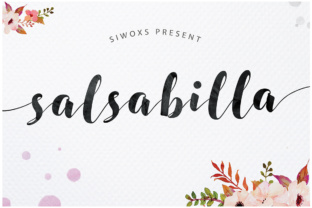
What sets Salsabilla apart from other brush scripts is its deliberate exaggeration of two core elements: stroke weight and letter height. The thick, bold downstrokes contrast sharply with the thin, airy upstrokes, creating a dynamic rhythm that mimics the pressure and release of a real brush. Meanwhile, the ascenders and descenders are stretched to dramatic lengths, giving the font an almost calligraphic flourish that draws the eye across the page. This combination results in a typeface that feels simultaneously bold and delicate—a rare balance that makes Salsabilla suitable for both eye-catching headers and elegant decorative text.
Unlike many script fonts that try to replicate perfect handwriting, Salsabilla embraces the imperfections of brush calligraphy. The slight wobble in some curves, the varying angles in connecting strokes, and the intentional blobs of ink at certain terminals all contribute to its organic charm. These characteristics are not flaws—they are features that give the font its personality and warmth.
Where Brush Calligraphy Meets Modern Functionality
Brush calligraphy has experienced a renaissance in recent years, driven by the popularity of bullet journaling, stationery design, and hand-lettered branding. Yet many calligraphic fonts either look too formal (like classic copperplate scripts) or too messy (like grunge brushes). Salsabilla occupies a sweet spot: it is refined enough to be used in professional contexts, yet casual enough to convey approachability and creativity.
This versatility comes from the font’s careful attention to rhythm. The exaggerated heights mean that even in short phrases, the letters dance across the baseline, creating a visual melody. Designers can use Salsabilla to add a touch of handcrafted authenticity to digital projects—something that audiences increasingly crave in an age of sterile, automated design.
Ideal Applications: Where Salsabilla Shines
Because of its pronounced stroke contrast and tall ascenders, Salsabilla works best as a display font. It is not designed for long paragraphs of body text; rather, it commands attention in short bursts. Here are some of its most compelling use cases:
- Branding and Logos – Small businesses, creatives, and lifestyle brands often use Salsabilla to convey a handmade, boutique feel. A coffee shop logo, a bakery’s name, or a salon’s tagline set in Salsabilla immediately communicates warmth and artisanal quality.
- Invitations and Stationery – Wedding invitations, save-the-dates, and greeting cards benefit from the font’s romantic yet relaxed personality. The exaggerated flourishes make each line feel like a special message written by hand.
- Social Media Graphics – Quote posts, inspirational phrases, and product highlights on Instagram or Pinterest look more engaging when set in Salsabilla. Its casual elegance catches the scrolling eye and encourages engagement.
- Packaging and Labels – Product packaging for handmade soaps, candles, or organic foods can use Salsabilla to emphasize natural ingredients and artisanal crafting. The font’s brush-like quality reinforces the idea of small-batch production.
- Headers and Titles – In magazines, websites, or brochures, Salsabilla serves as a striking header font that contrasts well with clean sans-serif body text.
Advantages That Make Salsabilla a Designer’s Ally
Beyond its aesthetic appeal, Salsabilla offers practical benefits that make it a smart addition to any font library:
- Readability at Medium to Large Sizes – Despite its decorative nature, the letterforms are carefully constructed to remain legible. The open counters and generous spacing prevent the strokes from clumping together, even when the font is scaled up.
- Versatile Pairing Options – Salsabilla’s casual elegance pairs beautifully with geometric sans-serifs (like Montserrat or Raleway) for a modern look, or with simple serifs (like Garamond) for a more classic feel. It also works alongside other script fonts if you maintain contrast in weight and style.
- Emotional Resonance – Because it mimics human handwriting, Salsabilla instantly adds a personal, human touch. This is invaluable for brands that want to build trust and emotional connection with their audience.
- Optimized for Digital and Print – The font has been carefully hinted to ensure smooth rendering on screens, while its robust stroke outlines hold up well in high-resolution print.
Considerations When Using Salsabilla
No font is perfect for every situation, and Salsabilla is no exception. Understanding its limitations helps designers use it more effectively:
- Avoid Small Sizes – Below 18–20 points, the exaggerated strokes and thin hairlines may become difficult to read, especially on low-resolution screens. Reserve Salsabilla for headlines, quotes, or decorative text above that threshold.
- Watch Letter Spacing and Kerning – The dramatic ascenders and descenders mean that tight line spacing can cause collisions. Increase leading (line height) by 1.5× or more to give each letter room to breathe.
- Consider Context – Salsabilla’s casual nature may not suit formal corporate materials (like annual reports or legal documents). It belongs in creative, lifestyle, and hospitality contexts.
- Test on Different Backgrounds – The thick-thin contrast can become lost on busy or textured backgrounds. For best results, place it on clean, light backgrounds or use a subtle drop shadow to maintain legibility.
Adding Salsabilla to Your Font Collection
For designers, hobbyists, and business owners alike, Salsabilla is not just another script font—it is a tool for storytelling. Its exaggerated weights and heights make every word feel deliberate and expressive. When you add Salsabilla to your font collection, you gain access to a typeface that can transform ordinary text into an invitation, a statement, or a piece of art.
The font is available from reputable foundries and often comes with standard OpenType features such as stylistic alternates and ligatures. Many versions include multiple glyphs for certain letters, allowing you to vary the look of repeated characters—a crucial feature for achieving that hand-lettered effect. Some foundries also offer a family that includes a companion sans-serif, making pairing even easier.
Practical Workflow Tips for Designers
If you are incorporating Salsabilla into your next project, consider these workflow suggestions:
- Use It as a Focal Point – Let Salsabilla carry the visual weight of a design. Keep other typographic elements minimal and neutral.
- Combine with Lowercase for Contrast – Salsabilla’s all-caps setting is stunning, but mixing uppercase with lowercase can create a more natural, conversational rhythm.
- Layer with Textures – Overlaying Salsabilla on subtle paper textures or watercolor backgrounds amplifies its handcrafted appeal.
- Create Custom Ligatures – If your design software supports it, experiment with the font’s built-in ligatures to connect letters in unique ways that enhance the calligraphic feel.
Real-World Examples of Salsabilla in Action
Imagine a small organic tea brand using Salsabilla for its product labels. The font’s casual yet elegant strokes convey the idea of carefully hand-blended ingredients. A florist might use it on a website banner for Valentine’s Day: “Roses Arranged with Love” set in Salsabilla with generous tracking, paired with a soft pastel background. The exaggerated heights of the letters draw the eye to the phrase, while the thick downstrokes give it weight and sincerity.
In the world of social media, an influencer promoting mindful living might post a graphic with the quote “Slow down and savor the moment” rendered in Salsabilla. The font’s relaxed posture aligns perfectly with the message, and the contrasting strokes create visual interest that stops the scroll.
Why Salsabilla Represents the Pinnacle of Brush Calligraphy Fonts
The design world is filled with brush scripts, but Salsabilla stands out because it dares to be bold in its expressiveness. It does not try to be neutral or invisible; it embraces its own voice. The exaggerated weights and heights are not arbitrary—they are carefully calibrated to maximize emotional impact while retaining functional readability. This is what makes it the pinnacle of brush calligraphy: it pushes the form to its limits without breaking it.
For educators teaching typography, Salsabilla provides a perfect case study in how stroke contrast and letter proportions affect tone. For hobbyists exploring hand-lettering, it offers a digital shortcut to achieving a look that otherwise requires hours of practice. And for business owners seeking to humanize their brand, it delivers a visual shorthand for authenticity and care.
Final Thoughts on the Salsabilla Experience
When you choose a typeface, you are choosing a voice for your content. Salsabilla speaks in a tone that is confident yet friendly, artistic yet accessible. Its exaggerated strokes and tall letters are not just stylistic quirks—they are the very elements that allow it to convey both beauty and casualness in equal measure. Whether you are a seasoned professional or a creative newcomer, adding this brush script to your toolkit opens up new possibilities for expression. Let Salsabilla’s unique rhythm guide your next design, and watch how a single font can transform the ordinary into something memorable.