AZ Imperial: The Vintage Tin Font That Brings Retro Character to Modern Design
There is something about old tin packaging that pulls at memory, even if you never lived during its heyday. The slightly weathered lettering on a biscuit tin from the 1920s, the bold serifs on a vintage tea canister, the worn charm of a toolbox from a grandfather's workshop — these objects speak a visual language that modern typography often struggles to replicate. AZ Imperial steps directly into that space, offering designers and creators a typeface that channels the spirit of century-old metal packaging without sacrificing readability or digital flexibility.
If you have been hunting for a font that feels both nostalgic and functional, this one deserves a close look. Whether you are building a brand identity, designing packaging for a craft product, or simply trying to capture a particular era in a poster or label, understanding what AZ Imperial offers — and where its true strengths lie — can save you hours of experimentation. Let us walk through what makes this typeface distinctive, where it excels, and how you can decide if it fits your next project.
What Is AZ Imperial and What Makes It Different?
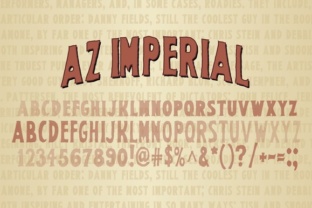
At its core, AZ Imperial is a display typeface inspired by lettering found on vintage tin containers, enamel signs, and early twentieth-century product packaging. It takes cues from the bold, confident serif styles that manufacturers used when printing directly onto metal or paper labels that would be affixed to cans and boxes. The result is a font that carries weight, warmth, and a slightly worn-in feel — as though it has lived through a few decades of use.
Unlike many retro fonts that simply mimic old shapes, AZ Imperial pays attention to the subtle irregularities that made hand-painted and early printed lettering so distinctive. The terminals have a soft bluntness, the serifs are sturdy without being overly ornate, and the overall proportions feel grounded rather than delicate. This gives the typeface a sense of honesty and durability, which is exactly what you want when you are trying to evoke an age when products were marketed with straightforward pride.
One of the more practical aspects of AZ Imperial is that it balances decorative appeal with legibility. Many vintage-inspired fonts sacrifice readability for atmosphere, but this one maintains clear letterforms even at moderate sizes. That makes it considerably more useful for real-world applications where text needs to be understood at a glance — think product labels, signage, or headlines on a packaging mockup.
Where AZ Imperial Shines: Real-World Applications
The true test of any typeface is not how it looks in a specimen sheet, but how it performs when placed into a genuine design context. AZ Imperial has found its way into several areas where its vintage tin character adds immediate value.
Packaging Design for Artisanal and Heritage Brands
Small-batch food producers, craft breweries, specialty coffee roasters, and handmade soap makers often lean into nostalgia to communicate quality and authenticity. A font like AZ Imperial works beautifully on labels for jams, honey, spices, teas, and baked goods. It suggests craftsmanship, tradition, and care — qualities that consumers associate with old-fashioned methods. When printed on kraft paper or matte stock, the typeface takes on an almost tactile quality that reinforces the handmade feel.
Signage and Display Work
For physical spaces — cafes, barbershops, hardware stores, or general stores with a retro theme — AZ Imperial can anchor a signage system. Its bold weight holds up well at large sizes, and the vintage character feels appropriate for storefronts that want to evoke a specific era without looking like a costume. Chalkboards, window lettering, and menu boards all benefit from the font's sturdy presence.
Posters, Flyers, and Event Branding
Concerts, festivals, farmers' markets, and community events with a rustic or historical theme often need visual materials that feel immediate and grounded. AZ Imperial works well for headlines and event titles, especially when paired with simpler sans-serif fonts for body text. The contrast between a bold, weathered serif and a clean modern companion creates a dynamic that feels both fresh and familiar.
Digital Mockups and Social Media Graphics
Even in purely digital contexts, AZ Imperial can bring a tactile warmth that breaks through the polished uniformity of most screen typography. Used sparingly — for a quote graphic, a product announcement, or a brand story post — it adds texture and personality. The key is restraint; using it as a headline font in a social media card or a landing page hero can instantly shift the tone from corporate to approachable.
Strengths That Matter When Working With AZ Imperial
Understanding a font's strengths helps you apply it with confidence. Here are the aspects of AZ Imperial that consistently stand out to designers who work with it regularly.
- Strong visual character. The font has a distinct personality that immediately communicates retro authenticity. You do not need to add extra distressing or texture — the typeface carries its own history.
- Readable at display sizes. Unlike overly ornate vintage fonts, AZ Imperial keeps letterforms clear. You can use it for headlines, subheads, and even short body text without losing legibility.
- Versatile weight. The available weights allow for flexibility. A bold weight works for primary messaging, while a lighter variant can handle secondary information without competing for attention.
- Compatibility with modern design tools. The font is available in standard formats (OTF, TTF, WOFF) and works across major design software, web platforms, and even some print-on-demand services.
- Pairing potential. AZ Imperial pairs well with neutral sans-serifs, clean modern serifs, and even script fonts for accent details. This gives you room to build a complete typographic system around it.
Limitations and Considerations You Should Know
No typeface is perfect for every job, and AZ Imperial has its boundaries. Being aware of these will help you avoid forcing it into situations where it will not perform well.
- Not ideal for long body text. The vintage styling, while beautiful, can become tiring in extended reading. Save it for headlines, labels, and short passages. For paragraphs, choose a more neutral companion font.
- Limited language support. Depending on the version you use, AZ Imperial may not include extensive diacritical marks or non-Latin scripts. Check the character set if your project requires multilingual support or special typographic features.
- Can feel too themed in the wrong context. A modern tech startup or a minimalist fashion brand might find the font's retro character at odds with their visual identity. Use it where the vintage tone aligns with your message.
- Requires careful spacing. Some letter combinations may need manual kerning adjustments, especially at larger display sizes. Plan for a bit of fine-tuning in your workflow.
How to Evaluate Whether AZ Imperial Fits Your Project
Making the right choice about a typeface comes down to asking a few targeted questions about your specific needs. Here is a practical framework you can use when considering AZ Imperial.
First, consider the emotional tone you want to set. If your project calls for warmth, nostalgia, craftsmanship, or heritage, AZ Imperial is a strong candidate. If you need something futuristic, minimalist, or corporate, look elsewhere.
Second, think about the medium. The font performs exceptionally well in print, especially on textured or uncoated papers. It also works digitally, but you may want to test it at various screen sizes to ensure the vintage details read clearly on small displays.
Third, evaluate the text volume. If your design relies on a single bold headline or a handful of words, AZ Imperial can be the star. If you need to communicate longer messages, plan to use it only for emphasis and bring in a secondary typeface for the rest.
Fourth, test pairings early. Before committing to a full design, try AZ Imperial alongside a few different companion fonts. A clean, modern sans-serif like Lato, Montserrat, or Open Sans often creates a pleasing contrast. Or, for a more layered vintage look, try pairing it with a subtle script or a monospace font.
Practical Scenarios: AZ Imperial in Action
Let us walk through a few realistic examples to see how this typeface performs in actual projects.
Scenario one: A small-batch hot sauce label. The brand wants to convey heat, boldness, and a homemade feel. Using AZ Imperial in a bold weight for the product name, with a lighter weight for flavor descriptors, creates a label that looks like it could have been printed in the 1940s. Paired with a simple illustration and a kraft paper background, the font does the heavy lifting for the vintage aesthetic.
Scenario two: A farmers' market poster. The event needs to feel community-driven and seasonal. AZ Imperial set at a large size for the event name, with details in a clean sans-serif below, gives the poster a handcrafted, approachable feel. The font's sturdy serifs make the title legible from a distance, which is crucial for outdoor signage.
Scenario three: A coffee shop menu board. The shop has exposed brick, wooden shelves, and a general store vibe. AZ Imperial used for category headers — Coffee, Tea, Pastries — immediately reinforces the atmosphere. Drink names and prices can be set in a simpler font to keep the board readable, but the retro headlines set the tone.
Final Thoughts on Using AZ Imperial Thoughtfully
AZ Imperial is not a font you use by accident. It has a strong voice, and that voice needs to match the story you are telling. When you align it with a project that values heritage, warmth, and tactile authenticity, the typeface becomes more than decoration — it becomes part of the message itself.
The best results come from treating AZ Imperial with the same respect that old tin packaging once received: let it be bold, let it be straightforward, and let it carry the weight of the words it shapes. Whether you are designing a label for a family recipe, building signage for a local shop, or creating a poster for a community event, this typeface can give your work a sense of permanence and honesty that modern fonts rarely achieve.
Take the time to test it in your specific context. Pair it thoughtfully. Adjust the spacing. See how it behaves on paper and on screen. If you do that, you will know quickly whether AZ Imperial is the right fit — and if it is, you will have a tool that brings genuine vintage character to anything you create.