AZ Barista: A Practical Guide to Using a Vintage-Inspired Font in Modern Design Workflows
Typography is often the quiet backbone of a design project. It does not demand attention, yet it shapes how an audience perceives tone, trust, and time period. When you are building a brand identity, crafting a poster, or designing packaging that needs to feel both handcrafted and historically grounded, the typeface you choose can either anchor the concept or undermine it. AZ Barista is one of those fonts that carries a distinct sense of place and era. Inspired by Leonetto Cappiello’s poster art from the 1920s, this typeface brings a worn, antique texture that immediately signals authenticity and character. But using a font like AZ Barista is not simply about picking something that looks old. It requires thoughtful placement, a clear understanding of the visual context, and a practical approach to integration within a larger design or business workflow.
What is AZ Barista and Where Does It Fit?
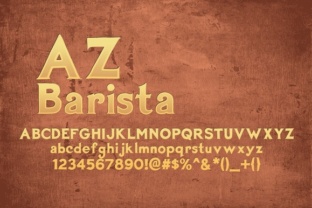
AZ Barista is a display typeface that draws direct influence from the bold, expressive lettering found in early twentieth-century poster design. Cappiello, often called the father of modern poster art, worked with exaggerated forms, strong contrasts, and a sense of movement that translated effortlessly into his typographic choices. The AZ Barista font captures that same energy, but with a deliberate patina. The edges are not perfectly clean. The strokes feel pressed rather than printed. There is a warmth and irregularity that makes each letter feel as if it has survived decades of use. This is not a font for body text or lengthy paragraphs. It is a display face meant for headlines, logos, labels, and short statements where presence matters more than readability at small sizes.
In a practical workflow, AZ Barista fits into what many designers call the expressive layer of a project. If you think of any design as having a structure layer (layout, grid, white space), a functional layer (body copy, navigation, data), and an expressive layer (headlines, accents, visual tone), then AZ Barista lives firmly in that third category. It is the voice that says something about the past, about craft, and about deliberate imperfection. When you are planning a project, identifying where this font will sit early in the process prevents mismatched expectations later. It is not a fallback face or a workhorse sans serif. It is a deliberate choice.
Using AZ Barista Before the Project: Planning and Conceptual Fit
The most effective use of AZ Barista starts before any design work begins. During the planning and research phase, you need to assess whether a vintage-inspired, Cappiello-influenced typeface aligns with the message your project intends to deliver. This is not about forcing a retro look onto every brief. It is about understanding when the texture and history of a font like AZ Barista can reinforce your core narrative. If you are working on a coffee brand that wants to evoke a 1920s European café, or a craft distillery that values tradition and analog production, the font becomes a natural extension of that story. On the other hand, if the project is centred on sleek minimalism or futuristic tech, AZ Barista may feel out of place no matter how well it is kerned.
During this early stage, consider also technical compatibility. Does your design software handle the font’s texture cleanly at various sizes? Do you have the proper licensing for web and print use? Will the worn edges hold up when scaled down for small badges or social media avatars? Answering these questions before you begin saves time and prevents rework. I have seen projects where a beautifully distressed font was chosen early, only to become unreadable at smaller screen sizes. AZ Barista benefits from being used at medium to large display sizes, so planning its placement around hero sections, product names, or event titles is a smart move.
Integrating AZ Barista During the Creative Process
Once you move into the design and development phase, AZ Barista interacts with several other elements in your workflow. The first consideration is pairing. Because the font carries such strong personality, you need a complementary typeface that provides balance. A clean, simple sans serif or a neutral serif works well to let AZ Barista take the spotlight without overwhelming the page. Think of it as a lead vocalist supported by a steady rhythm section. For example, you might use AZ Barista for a product name or a tagline, and pair it with a subdued grotesk for product descriptions, prices, or navigation. The contrast creates hierarchy and guides the viewer naturally.
Another practical interaction is with colour and texture. AZ Barista already has a worn, antique feel, so it works beautifully with muted, earthy palettes, off-whites, and dark ink tones. However, it can also pop against vibrant backgrounds if you want to recreate the energy of a Cappiello poster. In that case, you might use a deep red or rich ochre as a background and let the font sit in black or a light overlay. The key is testing the transparency and contrast early. A font that looks distinct in a design mockup can lose its character when printed on coated stock or viewed on a backlit screen. Always generate a few real-size samples within your actual medium before locking in the final choice.
When it comes to consistency and quality control, treat AZ Barista like any other asset in your system. Create a style guide entry for it. Specify the minimum size it should appear, the recommended tracking, and the preferred colour treatments. If you are working in a team, share those guidelines so everyone uses the font consistently across different pieces. This is especially important for branding projects where the font may appear on signage, packaging, social media, and printed collateral. Without those guardrails, the worn, irregular edges that give the font its charm can also lead to inconsistent rendering if different team members apply subtle color shifts or sizing changes.
Practical Implementation Tips for Real Workflows
Let me share a few specific ways AZ Barista integrates into common project types. These are not hypothetical scenarios. They are drawn from actual use cases where the font’s vintage character carried the design.
Branding and Identity Projects
For a small-batch roastery or a craft brewery, AZ Barista can serve as the primary wordmark or hero typeface. Begin by sketching the logo lockup by hand or in vector software, using the font as the foundation. Then layer in supporting elements like a simple badge shape, a repeating pattern, or a single illustrative icon. The font’s irregularity works well when you allow some letters to overlap or anchor into a horizontal rule. Test the lockup at a large scale for the website header and at a small scale for the favicon or stamp. If the font loses legibility at the smaller size, consider a simplified version or a separate compact mark.
Packaging and Label Design
AZ Barista excels on physical products that want to communicate handmade quality. For a coffee bag, a chocolate bar wrapper, or a soap label, use the font for the product name and a short descriptor. Pair it with a clean sans serif for ingredients or net weight. Because the font has a worn texture, it works well on matte or uncoated paper stocks. If you are printing on glossy materials, you may need to add a subtle grain or noise overlay to preserve the antique feel. Always request a physical proof before full production. What looks worn and charming on screen can sometimes read as blurry in print if the stock is too smooth.
Posters, Event Graphics, and Signage
This is the context where AZ Barista feels most at home, directly referencing Cappiello’s poster art. For an event poster, use the font for the event name in a large, bold treatment. Let the letterforms overlap the background illustration or photo slightly. Keep the composition simple so the type remains the anchor. For directional signage or menu boards, use AZ Barista sparingly for the main headings, and rely on a cleaner font for the supporting information. The goal is to let the vintage typeface set the tone without sacrificing readability at a distance.
After the Project: Archives, Revisions, and Long-Term Use
Once a project is published or printed, the work is not entirely done. If you plan to use AZ Barista across multiple seasons or product lines, maintain an asset library that includes the font file, license documentation, and the style guidelines you developed. This is especially important for small business owners or marketers who may revisit the brand identity months later. Without a central reference, it is easy to misplace the correct weight or apply the wrong tracking. I recommend storing the font in a shared cloud folder alongside visual examples of how it was used. This makes onboarding new team members or freelancers much faster.
For revisions or future iterations, treat the font as a long-term brand asset. If you start a new campaign that builds on the same visual identity, the font will provide continuity. However, be careful not to overuse it. A vintage-inspired typeface can feel gimmicky if it appears on every piece of collateral. Reserve it for moments that need emphasis and let the rest of the system stay restrained. That selective use preserves the font’s impact over time.
Observations on Usability and Organization
From a usability standpoint, AZ Barista is straightforward to install and use in most major design applications. It behaves like any standard OpenType font, so you can adjust kerning, tracking, and leading as needed. One observation worth noting is that the worn texture can create optical illusions at certain sizes. Letters with long descenders or ascenders may appear slightly heavier than their clean counterparts. If you are setting multiple lines, increase the leading modestly to prevent the textures from tangling visually. A little extra white space goes a long way in preserving clarity.
Organization within your font library also matters. If you work with dozens of typefaces, tag AZ Barista under categories like “vintage,” “display,” “Cappiello,” or “antique.” This makes it easier to find when you are brainstorming for a new project. I also recommend creating test files that show the font at various sizes, in different colour combinations, and paired with your common supporting typefaces. Those test files become a quick reference during the early stages of any project, saving you the trouble of reinspecting the font’s behaviour each time.
Efficiency and Consistency in Team Environments
For teams, integrating AZ Barista smoothly requires a bit of upfront coordination. Before the project starts, decide whether the font will be used for digital, print, or both. If both, confirm that the web version (if available) matches the desktop version in weight and texture variations. Inconsistent rendering between platforms can break the visual cohesion of a campaign. If you are a freelancer or solopreneur, this is less of an issue, but it is still wise to test on a few devices.
When handing off design files to a developer or a printer, include a clear note about the intended usage. For example: “This heading is set in AZ Barista. Maintain at least 48px on screen and 18pt in print. Do not outline the text unless absolutely necessary for production.” Small instructions like these prevent misunderstandings and ensure the font’s character survives the handoff.
Final Thoughts on Fitting AZ Barista into Your Work
AZ Barista is not a font you use by accident. It is a deliberate choice that works best when you understand its historical roots, its technical boundaries, and its role within a larger visual system. Whether you are designing for a coffee brand, a music event, or a product label, the key is to plan where it fits before you open your software, test it in context early, and document its usage for future reference. When handled with care, a typeface inspired by Leonetto Cappiello’s poster art can bring a warmth and authenticity that no clean, modern font can replicate. That is its real value: not just looking old, but feeling like it belongs to a story worth telling.