AZ Harpers July: A Clean Retro Font with Timeless Appeal
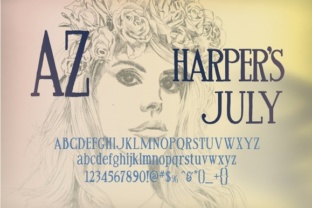
If you have spent any time browsing font libraries for a typeface that feels both classic and fresh, you have likely come across AZ Harpers July. This typeface draws direct inspiration from the poster art of Edward Penfield, the celebrated American illustrator who defined much of the visual identity of the 1890s and early 1900s. Penfield's work for Harper's Magazine is still studied for its clean lines, bold shapes, and understated elegance. AZ Harpers July captures that spirit while adapting it for modern use. The result is a font that feels like it belongs on a vintage poster and a contemporary website at the same time.
Many designers, small business owners, and content creators are drawn to this font because it offers something rare: a retro aesthetic that does not feel gimmicky. It is clean enough for body text in certain contexts, yet distinctive enough for headlines and branding. But as with any typeface with strong personality, using it well requires more than just downloading and typing. There are several common mistakes that can undermine the very qualities that make AZ Harpers July appealing in the first place.
Mistaking Retro for Old-Fashioned
One of the most frequent misunderstandings people bring to AZ Harpers July is equating its vintage roots with a need to make everything around it look aged. A font inspired by Penfield's poster art does not require distressed textures, sepia tones, or faux-worn edges to work. In fact, pairing this clean retro typeface with a crisp, modern layout often produces the most striking results. The contrast between a font that nods to the early 1900s and a clean, minimal design creates tension that feels intentional and sophisticated.
When you force an antique look onto every element surrounding the font, you dilute its strength. The font itself already carries the visual cues of its era. Let it breathe. Use it on a white background with generous spacing and let the letterforms do the work. If you find yourself adding grain, stains, or torn edges just to make the font "fit," step back and reconsider. The best use of AZ Harpers July is often the simplest.
Pairing It with the Wrong Companion Fonts
Another mistake that shows up repeatedly is choosing a secondary font that competes rather than complements. Because AZ Harpers July has a distinct personality, it needs a partner that knows when to step back. Avoid pairing it with other display fonts that have strong character, especially other retro-inspired typefaces. The result is usually visual noise, with each font fighting for attention.
A better approach is to choose a neutral, highly legible sans-serif for body text. Fonts like Open Sans, Lato, or even a classic Helvetica work well because they provide a clean contrast without stealing focus. The retro font then becomes the accent, the voice that draws the eye to headlines or key messages. If you are creating a brand identity, consider using AZ Harpers July for your logo or primary headings, and let a simple, modern font handle the paragraphs. This combination respects both the vintage inspiration and the need for readability.
Ignoring Spacing and Sizing Nuances
Typefaces inspired by poster art were originally designed for large formats. Edward Penfield's lettering appeared on magazine covers and promotional posters, not on business cards or mobile screens. When you bring AZ Harpers July into digital or small-scale print work, you need to adjust how you handle tracking, leading, and sizing.
A common complaint from people who try this font for the first time is that it feels too heavy or too tight at small sizes. That is not a flaw in the font itself; it is a sign that the spacing has not been adjusted. At display sizes, the default letter spacing may look perfect. At 14 or 16 points, you may need to increase tracking slightly to keep the letters from feeling crowded. Similarly, line height matters. Give the font room. Tight leading that works for a minimalist sans-serif can make AZ Harpers July look cramped and lose its clean, airy charm.
Always preview your font at the actual size it will be used. If you are designing a website, test it on a phone screen. If you are creating a flyer, print a sample at full size. The time you spend adjusting spacing is the difference between a design that looks intentional and one that looks like you just typed and hoped for the best.
Overusing It Across Every Element
Because AZ Harpers July is visually appealing, there is a temptation to use it everywhere. Headlines, subheadings, body text, captions, buttons, and even footnotes all set in the same retro typeface. The result is overwhelming. A font with strong character is like a confident guest at a party: you want them to stand out, not dominate every conversation.
Reserve this typeface for the elements that need emphasis. Use it for your main heading, maybe a subheading, and a few select accents. Let the rest of your text live in a quieter, more neutral font. This restraint actually makes the retro font more effective. When readers see it, they know it matters. If everything is in the same distinctive style, nothing stands out, and the visual hierarchy collapses.
Choosing the Wrong Use Case Altogether
Not every project benefits from a retro-inspired typeface, and that is perfectly fine. Part of making good design decisions is knowing when a font like AZ Harpers July is the right tool and when it is not. This font shines in branding for cafes, boutiques, creative agencies, editorial work, event posters, and any context where a handcrafted, classic feel adds value. It feels natural for businesses that want to communicate warmth, tradition, or craftsmanship.
However, if you are designing for a financial services website, a medical practice, or a high-tech startup, this font may send the wrong signal. The retro character implies nostalgia and a slower, more deliberate pace. That can work beautifully for certain messages, but it can feel mismatched for industries that want to project speed, innovation, or clinical precision. Consider your audience and your message before committing. A beautiful font used in the wrong context still looks like a mistake.
Neglecting Legibility at Smaller Sizes
Even with proper spacing, AZ Harpers July is primarily a display typeface. That means it was designed to make an impact at larger sizes, typically 24 points and above. Trying to use it for long paragraphs at 12 points will frustrate your readers. The letterforms may start to blur together, and the retro details that look charming at scale become a hindrance to quick reading.
If you need body text, pair this font with a readable companion, as mentioned earlier. If you absolutely must use it for shorter passages, such as a pull quote or a brief callout, keep the text very short and increase the size. A good rule of thumb is that if you have to squint to read it, your audience is having the same trouble. Legibility is not negotiable, no matter how beautiful the font.
What to Check Before Committing to AZ Harpers July
Before you finalize a design using AZ Harpers July, run through a short checklist. First, confirm that the license covers your intended use, especially if you are using it for commercial projects or embedding it in a digital product. Second, test the font across the mediums where it will appear. A font that looks perfect on your monitor may behave differently when printed or rendered on a mobile browser. Third, verify that the tone matches your brand or message. If there is any doubt about whether the retro style fits, ask a colleague or client for a fresh perspective.
Also, look at the font's character set. Make sure it includes the glyphs you need, such as accented letters, special punctuation, or numerals that match your design. Some revival fonts have limited character sets, and discovering this halfway through a project can cause unnecessary delays.
Making the Most of a Thoughtful Design Tool
AZ Harpers July is not just another display font. It carries a lineage that connects modern design to the craft of Edward Penfield and the golden age of American poster art. That heritage deserves respect, but it also demands careful handling. When you treat this font as a tool with specific strengths, rather than a one-size-fits-all solution, you unlock its full potential.
The designers who get the best results from AZ Harpers July are those who pair it with restraint, adjust spacing for context, and choose projects where its voice truly belongs. They do not try to force it into every layout or make it look older than it already is. They let the clean, retro lines speak for themselves, and they trust that the audience will respond to that quiet confidence.
Whether you are branding a new business, designing a poster for a local event, or building a website that needs a touch of timeless class, this font can be a reliable ally. Learn its habits, respect its limits, and use it with intention. That approach will serve you far better than chasing trends or trying to make every design look like a vintage artifact. Good typography is not about how many fonts you use, but how well you use the ones you choose.