The Art of AZ Vintage Tattoo: Rediscovering Early 1900s Tattoo Fonts and Retro Design
There is something undeniably magnetic about the bold, weathered look of an old-school tattoo. The thick lines, the faded colors, and especially the lettering—those heavy serifs, the dramatic shadows, the unmistakable feel of another era. If you have ever admired a flash sheet from the early 1900s or wondered why certain fonts just feel like they belong on a bicep or a chest piece, you are already familiar with the draw of AZ vintage tattoo style. But what exactly defines this aesthetic, and why does a retro font based on early 1900s tattoo lettering still hold such power in modern design and body art? In this article, we will take a close look at the origins, the artistry, and the lasting relevance of vintage tattoo typography, from its roots in circus banners and sailor traditions to its place in today's studios, brands, and creative projects.
What Is AZ Vintage Tattoo? Understanding the Aesthetic
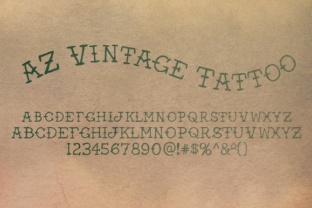
AZ vintage tattoo is not just a location or a single studio—it is a broader reference to the classic, time-honored style of tattooing that flourished in the American Southwest and across the country during the early decades of the twentieth century. The "AZ" can be read both as a nod to Arizona's rich tattoo heritage and as a shorthand for the full range—"A to Z"—of vintage tattoo artistry. At its heart, this style is defined by strong black outlines, a limited but vivid color palette (red, green, yellow, black), and a heavy reliance on typography that feels as permanent as the ink itself.
The fonts used in these tattoos were never arbitrary. They were chosen for maximum impact, often drawn by hand directly onto the skin before machines were common. Lettering styles like Old English, circus block, and sailor script dominated the flash sheets. Each letter was built with thick, deliberate strokes, often shaded with a simple drop shadow to create a three-dimensional effect that popped even under dim parlor lights. This is the visual language of AZ vintage tattoo: raw, honest, and built to last.
The Origins of Early 1900s Tattoo Fonts
To understand the retro font style of early 1900s tattoos, you have to look at the culture that produced them. Tattooing in America during this period was closely tied to traveling circuses, carnivals, and naval ports. Artists like Norman "Sailor Jerry" Collins and Bert Grimm became legends not only for their imagery but for their lettering. They adapted typefaces from Victorian-era posters, newspaper headlines, and military insignia, distilling them into forms that could be rendered with a single needle or a shader.
The Rise of Old English and Circus Lettering
Two families of type dominate early 1900s tattoo fonts. The first is Old English, also known as Blackletter. This style carries a weight of tradition and authority—it was used for everything from biblical texts to fraternal lodge certificates. In tattoo form, its angular, ornate strokes conveyed seriousness and permanence. Names, dates, and mottos were often inscribed in Old English because it felt timeless and dignified.
The second major style was the bold, rounded lettering seen on circus banners and freak show signs. Often called "circus block" or "strongman script," this font was designed to be read from a distance. Each letter was thick, squat, and often outlined in a contrasting color. Tattoo artists borrowed this approach to create chest pieces and arm bands that announced a person's identity or allegiance with unmistakable clarity. The combination of these two styles—refined Old English and brash circus block—formed the backbone of early American tattoo typography.
Why Retro Fonts Matter in Modern Tattoo Culture
You might wonder why anyone today would look back at fonts from over a century ago. The answer lies in authenticity and emotional resonance. In a world of digital fonts and endless stylistic options, a retro font based on early 1900s tattoo lettering carries a sense of history that cannot be faked. When someone chooses an AZ vintage tattoo style font for their ink, they are connecting to a lineage of craftsmanship and personal expression that predates modern tattoo trends.
Moreover, these fonts are incredibly versatile. They work just as well for a single word as for a full sentence. They hold up on curved areas like the ribs or biceps. They age gracefully because the bold lines resist fading and blurring. For artists, mastering these fonts is a rite of passage. It teaches the fundamentals of letter spacing, line weight variation, and shading—skills that apply to any style of tattooing.
How Artists Use Vintage Typefaces Today
Modern tattoo artists who specialize in traditional or neo-traditional work often keep a library of vintage flash sheets for reference. They may tweak an Old English capital or add a decorative flourish to a circus block letter, but the core structure remains the same. Some studios, like those that carry the AZ vintage tattoo spirit, even design their own custom lettering based on historical examples. This practice ensures that the font feels unique while staying true to its roots.
Beyond the tattoo world, these typefaces have found a second life in graphic design. Logos for breweries, barbershops, motorcycle clubs, and artisanal brands frequently borrow from early 1900s tattoo lettering. The reason is simple: the font communicates strength, tradition, and a handmade quality that consumers trust. A brand that uses a retro tattoo font is making a statement about its values—honesty, durability, and a respect for the past.
The Connection Between Tattoo History and Modern Design
The relationship between tattoo typography and modern design is not just coincidental. It is a direct line of influence that runs from the early 1900s parlors to today's digital studios. Early tattoo artists were often sign painters, printers, or carousel decorators before they picked up a tattoo machine. They brought with them a deep understanding of letterforms and composition. When they created a font for a tattoo, they were drawing on centuries of typographic tradition.
Today, designers who create retro tattoo fonts for digital use study the same sources. They examine old flash sheets, photograph vintage storefronts, and analyze the way ink spreads on skin. The result is a font that looks authentic because it is built on authentic principles. This is why an AZ vintage tattoo-inspired font can feel so "right" even to someone who has never been tattooed. It taps into a visual language that our culture has been reading for over a hundred years.
Examples in Branding, Merchandise, and Art
Consider the logo of a small-batch hot sauce company. The lettering is bold, slightly irregular, and shaded with a simple drop shadow. That is a direct descendant of early 1900s tattoo fonts. The same can be seen on the packaging of craft sodas, the signage of cocktail bars, and the merchandise of bands playing rockabilly or punk music. These fonts are not just decorative—they signal a commitment to quality and a rejection of mass-produced blandness.
In the art world, illustrators and muralists have also embraced the retro tattoo aesthetic. Large-scale works that incorporate classic lettering often reference the same flash sheet designs that sailors wore in the 1910s. By doing so, they create a bridge between public art and personal expression, reminding viewers that tattooing has always been a form of storytelling.
Common Misunderstandings About Vintage Tattoo Fonts
One of the most persistent misconceptions is that vintage tattoo fonts are limited to "old school" designs and cannot be adapted for modern use. This is simply not true. While the base styles—Old English and circus block—are rooted in a specific era, they can be customized with new colors, outlines, and ornamentation. A skilled artist can make an early 1900s font feel contemporary by adjusting the spacing or adding subtle gradients.
Another misunderstanding is that these fonts are illegible or overly ornate. In reality, the best vintage tattoo lettering is carefully designed for clarity. Artists who worked on ships and in carnivals knew that a tattoo had to be readable up close and from a few feet away. They avoided excessive flourishes that would muddy the text. A well-executed retro font is as easy to read as any modern sans-serif, but with far more character.
Finally, some people assume that using a vintage font is a shortcut—that it requires less skill than designing a custom typeface. This could not be further from the truth. Recreating an early 1900s tattoo font by hand demands a deep understanding of letter structure, proportion, and the physical behavior of ink. Every curve and shadow must be intentional. The best AZ vintage tattoo styles look effortless, but they are the result of years of practice.
Practical Tips for Choosing a Retro Tattoo Font
If you are considering a tattoo that uses vintage lettering, or if you are a designer looking to incorporate early 1900s typography into a project, here are a few practical guidelines:
- Match the font to the message. Old English works well for names, dates, and solemn statements. Circus block or bold slab serifs are better for short, punchy phrases or single words.
- Consider placement carefully. Bold, wide letters need flat or gently curved surfaces. Narrow areas like the wrist or collarbone may require a condensed style.
- Work with an experienced artist. Not every tattooist specializes in traditional lettering. Look for someone who studies flash sheets and understands the history of the style.
- Don't be afraid to mix styles. A vintage font can be paired with modern imagery or vice versa. The contrast can create a striking piece that feels both fresh and timeless.
- Think about longevity. Bold lines age better than thin ones. A retro font that uses heavy outlines and solid fills will remain readable for decades.
The Enduring Appeal of Early 1900s Tattoo Style
There is a reason that AZ vintage tattoo and its associated fonts have never truly gone out of style. They represent a time when tattooing was a craft practiced by outsiders—sailors, circus performers, laborers—who marked their bodies with symbols of identity and belonging. The fonts they used were not chosen from a drop-down menu. They were drawn by hand, one letter at a time, with the understanding that the result would be permanent.
In an age of digital precision and endless choices, there is something deeply grounding about that handmade quality. A retro font based on early 1900s tattoo lettering is not just a design choice. It is a connection to a history of resilience, creativity, and personal storytelling. Whether you are getting inked, designing a logo, or simply appreciating the aesthetics of the past, these letters carry a weight that no modern typeface can replicate.
From the dusty parlors of the Southwest to the sleek studios of today, the tradition of AZ vintage tattoo lives on in every bold, well-crafted letter. It reminds us that the best art is not always the newest—it is the art that stays true to its roots while finding new ways to speak to the present. If you are drawn to this style, you are not just following a trend. You are honoring a craft that has been telling stories in ink for over a hundred years, one letter at a time.