The Story of Jackfont: How Type Designer Pere Esquerrà Captured the Spirit of the Beach
Typography is often described as the voice of design. Some fonts speak with formality, others with authority, and a select few manage to whisper joy. Among the most recent additions to this playful category is Jackfont, a typeface created by Barcelona-based designer Pere Esquerrà. Conceived with the beach as its central muse, Jackfont is more than just a collection of letters—it is an invitation to relax, smile, and embrace a lighter side of visual communication.
In this article, we will explore Jackfont from the ground up. We’ll look at who Pere Esquerrà is, what makes this typeface so distinctive, why the beach served as such a powerful source of inspiration, and how a playful font like Jackfont can find relevant, effective uses in modern branding, creative projects, and everyday digital life.
Who Is Pere Esquerrà? The Mind Behind the Letters
Pere Esquerrà is a Spanish type designer and lettering artist whose work frequently blurs the line between typography and illustration. Based in a coastal creative community, Esquerrà has spent years studying how letterforms can carry emotion and narrative. His portfolio includes custom lettering for brands, editorial work, and retail typefaces that prioritize personality over neutrality.
Esquerrà brings a unique perspective to type design. Rather than approaching letters as purely functional symbols, he treats each character as a shape that can evoke a memory, a mood, or a sense of place. This philosophy is perfectly embodied in Jackfont, a typeface that did not begin as a technical exercise but as a creative sketch inspired by the freedom and imperfection of a day at the shore.
The Beach Inspiration: Where Jackfont Found Its Soul
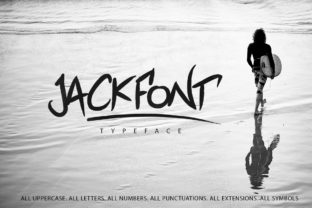
The beach is not typically the first thing that comes to mind when we think about typography. Yet for Esquerrà, the beach offered everything he needed: a relaxed pace, organic shapes, soft curves, and a hint of unpredictability. Jackfont was designed with the beach in mind, and that influence shows in every detail.
When you examine Jackfont, you will notice that the characters feel almost hand-drawn. They are not rigidly uniform. The curves are soft, the terminals are rounded, and the overall impression is one of breezy, sun-soaked casualness. It is as if the letters were drawn by someone sitting on a towel, letting the pencil wander with the same ease that the waves wander across the sand.
Esquerrà drew inspiration from the natural irregularities found along the coastline—the way water shapes driftwood, the way footprints settle into wet sand, the way light reflects off the surface of the sea. These organic elements translate into a typeface that feels alive and unpolished in the most intentional way.
What Makes Jackfont a Playful Typeface?
Playfulness in typography is not just about looking fun—it is about breaking expectations in a way that feels delightful rather than disruptive. Jackfont achieves this through several key characteristics:
- Irregular stroke weight: Unlike traditional typefaces where the thickness of each line is carefully measured and consistent, Jackfont allows strokes to vary naturally. This gives the text a handcrafted, human quality.
- Rounded terminals and open counters: The open, rounded shapes inside letters like "a," "e," and "o" make the font feel inviting and approachable.
- Bouncy baseline: Many characters in Jackfont sit slightly above or below a strict baseline, mimicking the loose rhythm of handwriting.
- Soft connectors and flourishes: Some letters feature decorative tails or connecting strokes that add movement, like the gentle curve of a wave.
These features combine to produce a typeface that is stunningly playful—it does not try to be serious, and it does not pretend to be perfect. It invites the reader to relax, much like the beach environment that inspired it.
The Purpose and Significance of a Playful Font in Design
You might wonder why a designer would choose a playful font over a more conventional one. The answer lies in the effect you want to have on your audience. Typography is a form of non-verbal communication. When someone reads a headline set in Jackfont, they do not just read the words—they feel the tone. Playful fonts like Jackfont lower the guard of the reader, signaling that the content is not overly formal, not intimidating, and perhaps even enjoyable.
In a world where digital interfaces, advertisements, and even printed materials can feel cold and uniform, injecting personality through type becomes a powerful strategy. Businesses and creators who want to stand out, convey warmth, or target audiences that value authenticity often turn to custom or expressive typefaces. Jackfont fits squarely into this need.
Moreover, playful fonts have a surprising level of sophistication. They require strong design skills to balance readability with whimsy. Esquerrà's work with Jackfont demonstrates that a font can be both fun and functional—a combination that is harder to achieve than it sounds.
Practical Applications: Where Jackfont Shines
While it might be tempting to assume Jackfont is only suitable for children's products or seasonal beach-themed flyers, its practical relevance extends far wider. Here are some of the most effective applications:
- Branding for lifestyle and hospitality businesses: Surf shops, beach resorts, summertime cafes, organic juice bars, and wellness retreats can all benefit from a hand-drawn, relaxed typeface that communicates a laid-back ethos.
- Social media graphics: Jackfont adds instant personality to Instagram posts, stories, and quote cards. Its handcrafted feel fits well with the current trend of authentic, less-polished content.
- Product packaging: Small-batch, artisanal, or eco-friendly products often use playful typography to express their handmade or natural values. Jackfont works well on labels for candles, soaps, or gourmet food items.
- Editorial and blog headers: In digital publishing, a distinct header font can set the tone for an entire article. Jackfont is excellent for travel diaries, lifestyle magazines, or personal blogs that want to feel intimate and creative.
- Event materials: Wedding invitations, party flyers, and workshop posters benefit from a font that feels personal and celebratory.
Esquerrà's typeface is especially effective when used for display purposes—headlines, titles, short passages, or callouts—rather than for long body text. This is typical for playful fonts, as their expressive shapes can become tiring to read in extended paragraphs.
Jackfont in Modern Branding and Creativity
The modern branding landscape has seen a noticeable shift away from sterile corporate typography. Startups, creative agencies, and even established companies are embracing custom fonts that tell a story. Jackfont fits this trend perfectly because it does not simply look nice—it has a story. The beach inspiration gives it a narrative that brands can latch onto.
Consider a small surfboard company that uses Jackfont in its logo and packaging. The font immediately communicates core brand values: freedom, nature, craftsmanship, and joy. It is a faster and more emotional method of communication than any mission statement.
Similarly, for creative professionals—designers, illustrators, video creators—Jackfont offers a tool that can elevate their work without requiring them to design custom lettering from scratch. It provides an accessible way to add a hand-drawn, personal touch to projects that might otherwise feel generic.
Common Misunderstandings About Playful Fonts Like Jackfont
Despite their growing popularity, playful fonts are sometimes undervalued or misunderstood. Let us clarify a few points that often come up:
- Misunderstanding: Playful fonts are not professional for business use.
Clarification: This depends entirely on the business. A law firm or financial institution might avoid Jackfont, but a creative studio, surf shop, or lifestyle brand would benefit from its character. Professionalism is about appropriateness, not severity. - Misunderstanding: Playful fonts are hard to read.
Clarification: While some novelty fonts sacrifice legibility, Jackfont is carefully designed to maintain readability within its expressive style. The letterforms are distinct, the proportions are clear, and the playfulness does not come at the cost of function. - Misunderstanding: A font like Jackfont is a one-trick pony only for beach themes.
Clarification: The beach was the inspiration, but the font's warmth and informality can apply to any context that values approachability and creativity—from hip cafes to children's book covers to event branding.
How to Pair Jackfont with Other Typefaces
For designers wondering how to integrate Jackfont into a broader typographic system, pairing is key. Because Jackfont is so expressive, it works best when balanced with a more neutral, readable companion font for body text. Here are some guidelines:
- Pair with a clean sans-serif: Fonts like Open Sans, Lato, or Montserrat provide a subtle contrast to Jackfont's organic feel. The sans-serif acts as the "straight man" to Jackfont's playful lead.
- Avoid pairing with another expressive font: Too many voices create visual noise. Let Jackfont be the star for headlines and accents, while a simpler font handles the heavy reading.
- Use Jackfont sparingly for emphasis: Even within a design, Jackfont can be reserved for the most important words or phrases, drawing attention without overwhelming the layout.
This kind of pairing strategy is what separates professional design from amateur experimentation. It ensures that playfulness has a purpose and that the overall composition remains polished.
Building a Broader Understanding of Typography
To fully appreciate what Pere Esquerrà has achieved with Jackfont, it helps to step back and consider the broader role of typography in our lives. Every day, we encounter hundreds of typefaces—on phone screens, street signs, product labels, and menus. Most of them go unnoticed because they are designed to be invisible, to let the message pass through without interference.
But fonts like Jackfont remind us that type can be part of the message itself. They encourage us to slow down, look closer, and feel something. In a fast-paced digital age, that is a rare and valuable quality.
Esquerrà's approach—grounding a typeface in a specific emotional and physical landscape—aligns with the modern push toward authentic, human-centered design. Rather than creating a font that works everywhere, he created one that feels like somewhere. That somewhere is the beach: warm, imperfect, and alive with possibility.
Conclusion: The Lasting Appeal of Jackfont
Jackfont is a testament to the power of inspiration found in everyday places. Pere Esquerrà did not set out to design a typeface that would change the industry—he set out to capture the feeling of a sunny afternoon by the sea. The result is a stunning playful font that has found its way into the hands of designers, brand owners, and creatives who value warmth over perfection.
Whether you are building a brand identity, crafting a social media campaign, or simply looking for a typeface that brings joy to your next project, Jackfont offers a compelling option. It proves that a font can be more than a tool—it can be a mood, a memory, and an invitation to relax, even for just a moment.
As you explore the possibilities of Jackfont, remember that the best design often comes from unexpected places. In Esquerrà's case, that place was the shore, where the sand meets the water, and where creativity finds its most natural rhythm.