AZ Indian Font: Reviving the Spirit of Early Motorcycle Heritage in Modern Design
Typography is one of the most powerful tools in a creator's arsenal. It conveys mood, builds identity, and often tells a story before a single word is read. Among the growing palette of typefaces that designers are turning to, AZ Indian stands out for its unmistakable connection to a defining era in American industrial design. Inspired directly by the original Indian Motorcycle logo from the early 1900s, this font carries a robust, retro presence that speaks to authenticity and craft. But AZ Indian is more than a decorative revival piece. It reflects a broader movement in branding, content creation, and consumer culture that prizes heritage, tangibility, and emotional resonance over sterile perfection. This article explores what AZ Indian is, why it matters now, and how it fits into the evolving expectations of professionals, entrepreneurs, and marketers who seek to build lasting visual impact.
What Is AZ Indian? A Typeface Rooted in History
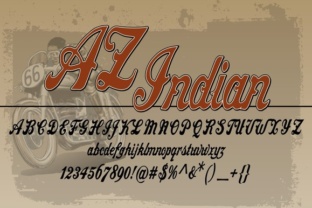
AZ Indian is a display typeface that draws its design DNA from the logotype used by Indian Motorcycle, one of America's earliest and most storied motorcycle manufacturers. The original logo, crafted in the early twentieth century, featured heavy, slab-like letterforms with pronounced serifs and a confident, grounded stance. The AZ Indian font recreates that look with careful attention to proportion, weight, and character spacing, offering contemporary users a faithful yet versatile interpretation of that early industrial aesthetic.
What makes AZ Indian distinctive is not simply its vintage silhouette, but the way it captures a specific moment in design history. The early 1900s were a time when typography was still deeply tied to craftsmanship. Letterforms were carved, cast, and printed with physical presence. Logos communicated durability and trust through sheer visual weight. AZ Indian channels that philosophy directly. Its thick strokes, stable baseline, and deliberate serifs give it a monumental feel that is hard to achieve with more neutral or geometric typefaces. For designers and brand owners, using AZ Indian is a conscious choice to borrow from that vocabulary of strength and permanence.
It is important to note that AZ Indian is not intended for extended body text. Like many revivalist display faces, it performs best at larger sizes where its details can be appreciated. Headlines, logotypes, posters, merchandise, and hero sections are natural habitats for this typeface. When used appropriately, it brings a tactile, almost sculptural quality to digital and print media alike.
How AZ Indian Fits into Broader Creative and Market Trends
The resurgence of interest in typefaces like AZ Indian is not happening in isolation. It is part of a wider cultural shift toward authenticity and heritage in visual communication. Over the past decade, the design world has moved away from the uniform minimalism that dominated the early 2010s. Brands, especially those targeting discerning audiences, are rediscovering the value of texture, imperfection, and historical reference. This trend is visible across industries from craft beverage packaging to boutique hospitality, independent publishing, and digital-first product branding.
Several converging factors explain why this is happening. First, there is a growing consumer appetite for stories that feel real. In an era of mass production and algorithmic content, heritage typography offers a shortcut to credibility. A font like AZ Indian immediately signals that a brand has roots, even if those roots are borrowed through design language. Second, the proliferation of digital tools has made high-quality custom typography accessible to small teams and independent creators. You no longer need a foundry budget to license a distinctive face; AZ Indian and similar typefaces are available to anyone who wants to inject vintage character into their work.
Furthermore, the rise of the experience economy has placed a premium on sensory richness. Consumers, particularly younger demographics, are drawn to brands that feel crafted rather than manufactured. Typography plays a subtle but critical role in that perception. A serif-heavy, slightly weathered display font like AZ Indian can transform a standard website header into a statement of intent. It tells the visitor, implicitly, that attention has been paid to detail. In crowded marketplaces, that impression can be the difference between a bounce and a conversion.
Why People Are Paying Attention to AZ Indian Now
The timing of AZ Indian's relevance is tied to a renewed interest in Americana and early industrial design. Motorcycle culture, with its emphasis on freedom, durability, and rebellion, continues to hold a powerful place in global imagination. But beyond the obvious connection to two-wheeled heritage, AZ Indian appeals to a broader set of creators who are looking for typefaces that carry narrative weight.
Professionals in branding and marketing are increasingly aware that typography choice is a strategic decision. A font is not merely a stylistic preference; it frames how content is received. AZ Indian offers a shortcut to a specific emotional register. It evokes independence, craftsmanship, and timelessness. For a freelancer launching their own identity, a brewery naming a new ale, or a media outlet designing a limited-edition print run, this font provides instant contextual framing. It says “this matters” without needing to spell it out.
Another reason for growing attention is the practical versatility of the typeface within certain design constraints. Unlike many highly ornate vintage fonts, AZ Indian retains strong legibility at display sizes. Its letterforms are bold and unambiguous, making it suitable for applications where readability cannot be sacrificed for atmosphere. Signage, event posters, and digital hero headers all benefit from this balance. Creators who have struggled with overly decorative fonts that lose clarity when scaled down find AZ Indian a reliable alternative that still delivers vintage character.
Changing Needs, Preferences, and Workflows That Make AZ Indian Relevant
The design and branding landscape has evolved considerably in recent years, and with that evolution come new requirements that typefaces like AZ Indian are well positioned to meet. One significant shift is the move toward differentiated brand identities in saturated markets. As more entrepreneurs and small businesses enter the digital space, the pressure to stand out has intensified. Generic typefaces no longer suffice. Brands need visual anchors that are memorable and shareable. A distinctive display font becomes a core element of that differentiation.
At the same time, workflow changes have made it easier to experiment with typography. Modern design tools, from Figma to Canva to Adobe Creative Suite, allow for rapid testing of typefaces across mockups and layouts. Creators can audition AZ Indian in a matter of minutes, seeing how it performs in context before committing. This low-friction exploration encourages more daring choices. Where a designer might have defaulted to a safe sans-serif five years ago, today they can confidently reach for a historically rooted display face and iterate until it fits.
There is also a notable shift in audience expectations around visual consistency. Consumers today are visually literate. They can spot a stock template or a generic font choice from a distance. Using a typeface with a distinct heritage like AZ Indian signals that a creator has invested in their craft. For marketers, this translates into higher engagement and trust. For entrepreneurs, it means their brand feels more established, even if it is brand new. The font itself becomes a credibility marker.
Additionally, the growing emphasis on direct-to-consumer channels has increased the importance of packaging and visual identity. Whether it is a product box, a social media graphic, or a website hero image, the typography must perform across touchpoints. AZ Indian's sturdy proportions and clear hierarchy make it adaptable for both physical and digital contexts. It works equally well embossed on a leather tag or rendered on a retina screen. That cross-medium reliability is a practical advantage that creators and business owners value.
Practical Examples and Observations of AZ Indian in Use
To understand the real-world utility of AZ Indian, it helps to consider scenarios where its specific qualities add measurable value. Imagine a small-batch coffee roaster launching a new blend. The brand wants to communicate heritage, quality, and a slightly rugged individuality. Using AZ Indian for the product name on the bag and the website hero pulls all those threads together. The font's weight suggests substance, while its vintage roots hint at tradition. Customers who may not know the font's history still absorb its message on an intuitive level.
Another example is a freelance designer or agency principal building their personal brand. In a field crowded with similar portfolios and service offerings, a distinctive typographic identity can be a differentiator. Using AZ Indian in a logo or on a landing page headline immediately sets a tone of confidence and authority. It suggests the designer values craft and is not following trends blindly. For potential clients, that signal can be persuasive.
Consider also the growing market for limited-edition merchandise, event collateral, and subscription boxes. These products thrive on scarcity and aesthetic appeal. AZ Indian lends itself well to numbered prints, enamel pins, tote bags, and posters. Its bold, retro feel aligns with the collectible nature of such items. Creators who produce physical goods report that typography often drives purchase decisions. A well-chosen font can elevate a simple product into something desirable.
Observations from the design community further reinforce these points. In forums, social media groups, and typography showcases, AZ Indian frequently appears in projects that emphasize storytelling and nostalgia. It is especially popular among branding for breweries, distilleries, barbershops, motorcycle gear, leather goods, and independent publishing. These are precisely the categories where authenticity and tactile quality matter most. The font has become a kind of shorthand for “this product was made with intention.”
Connecting AZ Indian to Larger Developments in Design and Business
Looking beyond individual use cases, AZ Indian is part of a larger conversation about the role of history in contemporary design. As digital saturation continues to grow, audiences are craving visual experiences that feel grounded. This has fueled a broader revival of interest in early twentieth-century design languages, from Art Deco to mid-century modern to industrial vintage. AZ Indian fits squarely within that revival, offering a specific flavor that ties directly to American manufacturing heritage.
From a business perspective, the font also aligns with the growing practice of “nostalgia branding.” Companies large and small are leveraging cultural memory to build emotional connections with customers. While nostalgia can be overused, it remains a potent tool when executed with authenticity. A typeface that genuinely originates from a historic logo carries more weight than a generic retro-styled font. AZ Indian has a direct lineage that designers can reference, adding depth to brand narratives.
Moreover, the democratization of design tools means that independent creators now operate in a landscape that once belonged exclusively to large agencies. Access to professional-grade typefaces like AZ Indian levels the playing field. A solo entrepreneur can produce identity work that rivals that of established brands, provided they make thoughtful choices. Typography is one of the most cost-effective ways to elevate perceived quality. Investing in a distinctive font like AZ Indian is a strategic move that pays dividends across every customer touchpoint.
Finally, the enduring relevance of AZ Indian points to a simple truth: good design is timeless. While trends come and go, the principles of proportion, contrast, and emotional resonance remain constant. Creators who understand this are always on the lookout for tools that deliver on those fundamentals. AZ Indian, with its roots in one of the most iconic logos of the early automotive age, offers exactly that combination of historical depth and practical utility. For professionals who take their craft seriously, it is not just a font. It is a statement.
Conclusion
AZ Indian is far more than a nostalgic novelty. It is a thoughtfully designed revival of a typographic classic, built to meet the needs of today's most discerning creators and brands. Its power lies in its ability to communicate strength, heritage, and craftsmanship with a single visual impression. As the demand for authentic, differentiated design continues to grow, typefaces like AZ Indian will only become more valuable. Whether you are a marketer building a campaign, an entrepreneur launching a product, or a freelancer shaping a personal brand, this font offers a distinctive tool for standing out in a crowded landscape. By embracing its vintage character, you tap into a well of emotional resonance that modern, frictionless design often misses. In a world hungry for meaning, AZ Indian delivers it one letter at a time.