Beer and Type: How a Designer Turned the World's Favorite Social Lubricant into a Font
There are few things on this planet as universally understood as beer. Whether it's a crisp lager shared after a long workday in Munich, a hoppy IPA passed around a campfire in Oregon, or a rich stout poured at a Dublin pub, beer has a singular ability to dissolve barriers. It is, in many ways, a magic poison—a phrase that captures both its intoxicating allure and its paradoxical role as a social glue. It brings together strangers, fuels conversations, and marks celebrations. But what happens when that liquid warmth and human connection get distilled into something entirely unexpected? What happens when beer becomes a font?
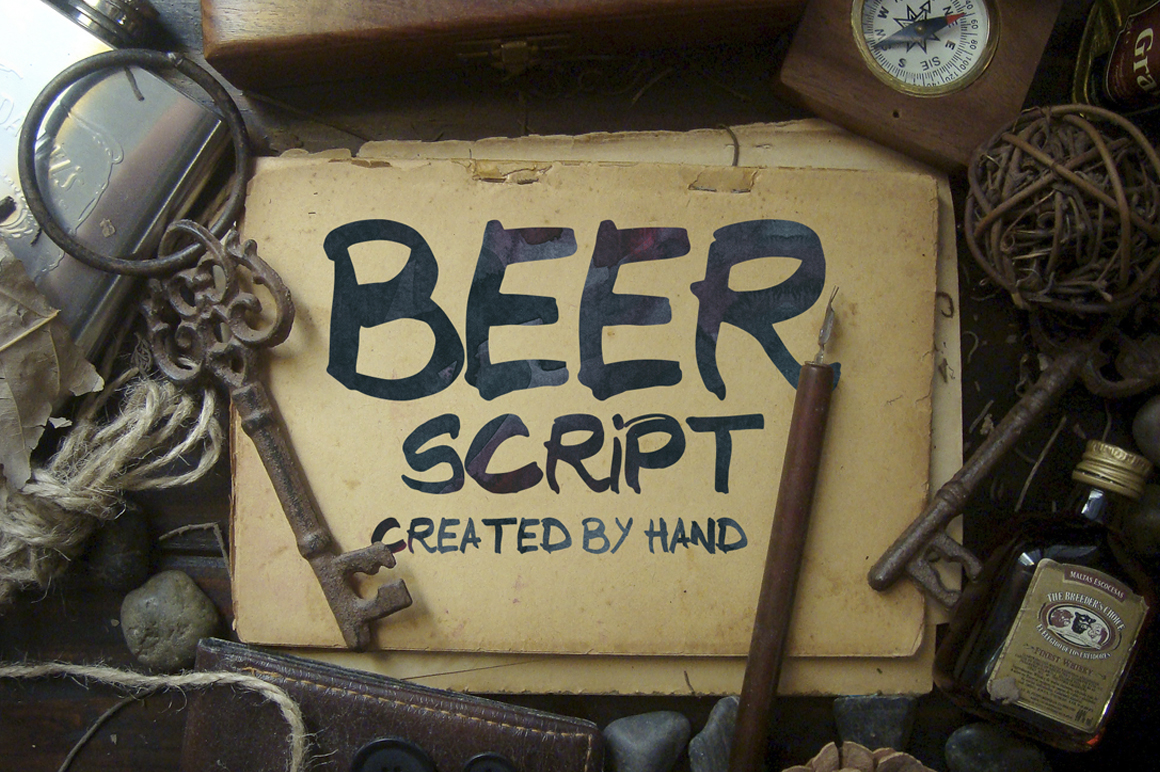
Type designer Pere Esquerrà asked himself that exact question. His answer? A beautiful handwritten script font that carries the weight, warmth, and solidity of a well-poured pint. The result is "Beer," a typeface that doesn't just look like something you'd find on a brewery label—it feels like one.
The Philosophy Behind the Pint: Why Beer Deserves Its Own Typeface
To understand why Esquerrà embarked on this project, you have to appreciate what beer represents culturally. Beer is not a pretentious drink. It is democratic. It is the beverage of the people, from ancient Mesopotamian brewers to modern craft enthusiasts. It is honest, robust, and unpretentious. A font named after beer cannot be delicate, fragile, or overly refined. It needs to have presence. It needs to stand its ground, just like a proper pint glass on a wooden table.
Esquerrà understood this implicitly. Rather than designing a generic script that merely looked "handwritten," he aimed to capture the tactile experience of beer itself. The strokes are not featherlight; they carry a deliberate heaviness. The letterforms are not rushed; they feel considered, like the patient process of brewing. The result is a script that feels both spontaneous and durable—as if it were written with a broad-nib pen dipped in rich amber rather than ink.
Anatomy of a Script With Substance
What makes the Beer font stand out in a crowded field of handwritten typefaces? The answer lies in its construction. Most script fonts lean toward one of two extremes: they are either overly elegant and difficult to read, or they are so casual they lack authority. Esquerrà's design navigates a careful middle ground. Each character has a solid, grounded feel. The ascenders and descenders are generous but not exaggerated. The connections between letters are smooth without being mechanical.
One of the most striking qualities of the Beer font is its weight distribution. Unlike many handwritten scripts that taper to hair-thin strokes, this typeface maintains a consistent visual mass. This gives it a physicality that is rare in digital typography. It feels like lettering that was carved into wood or pressed into damp paper, not something that was algorithmically generated. This solidity makes it highly legible even at smaller sizes, a practical advantage that many display-oriented scripts lack.
The font also features a carefully calibrated irregularity. Letters do not appear perfectly identical each time they render. This is not a defect; it is a deliberate nod to the imperfection of human handwriting. When you read a word set in the Beer font, you get the impression that a person wrote it—someone with a steady hand and a bit of confidence, perhaps after their second pint.
Where the Beer Font Excels in Modern Design Workflows
In the digital age, designers are constantly searching for typefaces that offer personality without sacrificing usability. The Beer font fits neatly into several contemporary use cases, making it a versatile addition to any typographer's toolkit.
Brewery and Beverage Branding
This is the most obvious application, and it is where the font truly sings. Whether you are designing a label for a small-batch IPA, a craft stout, or a seasonal ale, the Beer font immediately communicates authenticity. It suggests craftsmanship, tradition, and a human touch. In a market where consumers are increasingly skeptical of corporate aesthetics, a handwritten script like this helps brands feel approachable. A label using the Beer font tells customers, "We made this by hand, and we care about what goes into the bottle."
Restaurant Menus and Bar Signage
Establishments that serve beer—pubs, gastropubs, taprooms, and even upscale restaurants—can use the font to reinforce their atmosphere. A menu that uses the Beer font for headings or item descriptions feels more tactile and less sterile than one relying on standard sans-serifs. It invites the reader to slow down, to browse, and to imagine the taste of what is being offered. For chalkboard menus or digital displays, the font's solid feel ensures it remains readable under dim lighting or from a distance.
Event Promotion and Posters
Beer festivals, Oktoberfest celebrations, and brewery anniversaries are prime opportunities for this typeface. Posters, flyers, and social media graphics benefit from the handcrafted energy the font provides. Because the design is not overly ornate, it pairs well with both modern photography and vintage illustrations. It can anchor a poster's title while letting other design elements breathe.
Product Packaging Beyond Beverages
The font's appeal is not limited to beer itself. Think about artisanal goods: honey, hot sauce, barbecue rubs, handmade soaps, or craft chocolate. Any product that wants to project a rustic, handmade, or small-batch identity can benefit from the warmth of the Beer font. The solid script conveys durability and quality, which are desirable traits for consumables and handcrafted items alike.
Digital Content and Social Media
In a world where Instagram and TikTok drive discovery, brands need typefaces that look good on screens. The Beer font, with its balanced proportions and readable letterforms, works well for short-form content. It can appear in video titles, quote cards, and product announcements without feeling out of place. Its handwritten quality adds a personal touch to what can otherwise feel like mass-produced content.
Practical Benefits and Considerations for Adopting the Beer Font
Before incorporating any typeface into a project, designers evaluate practical factors. Here is what you should know about working with the Beer font.
Licensing and Availability
As with any professional typeface, ensure you have the appropriate license for your intended use. The Beer font is typically available through reputable type foundries and marketplaces. Some versions may include multiple weights or stylistic alternates, which can expand its utility. For commercial projects—especially branding and packaging—purchasing a proper license is non-negotiable.
Pairing With Other Typefaces
The Beer font works best as a display or heading typeface. Because of its strong personality and handwritten nature, it pairs most effectively with neutral, understated companions. A clean sans-serif like Helvetica, Open Sans, or Lato can provide balance. For a more traditional feel, a simple serif such as Garamond or Caslon creates a pleasing contrast. Avoid pairing it with another elaborate script, as the result will be visually chaotic. The key is to let the Beer font lead while its counterpart supports.
Readability in Extended Text
While the Beer font is legible at moderate sizes, it is not designed for long-form body copy. Using it for paragraphs of text will fatigue the reader. Reserve it for headlines, subheadings, pull quotes, and short bursts of text—three to five words at most for maximum impact. This is where its solid feel works best: in concentrated doses that allow each letter to register.
Color and Background Considerations
The font's weight allows it to work well on both light and dark backgrounds. For dark backgrounds, consider using it in white or light gold to mimic the look of chalk on a slate board. On light backgrounds, dark brown, deep amber, or black provide strong contrast. Avoid placing it on overly complex photographic backgrounds, as the organic letterforms can become lost. If you must use it over an image, ensure sufficient contrast or add a subtle text shadow.
Why "Solid Feel" Matters in Type Design
Esquerrà's deliberate focus on a solid feel is not merely an aesthetic choice; it is a functional one. In typography, weight communicates confidence. A font that feels solid suggests permanence, reliability, and strength. These are the same qualities we associate with a good beer. A thin, wispy script might convey elegance, but it would never convey the honest, unpretentious character of a pint shared among friends.
The solid feel also affects how the font is perceived across different media. In print, the heavy strokes hold up well on uncoated paper stock, where thinner lines might break apart or bleed into the paper fibers. On screen, the thick strokes reduce aliasing and improve legibility on low-resolution displays. This robustness makes the Beer font a practical choice for designers who need consistency across print and digital touchpoints.
Observations From the Design Community
Since its release, the Beer font has found an appreciative audience among designers who work in food, beverage, and lifestyle branding. Many have noted that it fills a specific niche: a handwritten script that is warm but not saccharine, sturdy but not clunky. It avoids the trap of looking like a generic "craft" font that could be swapped out for any other. Instead, it has a distinct voice.
Some designers have pointed out that the font works particularly well when paired with textured backgrounds—kraft paper, wood grain, concrete, or linen. The organic quality of the lettering complements the tactile nature of these surfaces. Others have praised its international appeal. Because the design is not tied to any specific calligraphic tradition, it works across Latin-based languages without feeling culturally out of place. It is equally at home describing a Belgian tripel as it is a German pilsner.
A Design That Invites Connection
At its core, the Beer font is about more than just letter shapes. It is about what those shapes evoke. When you see a word set in this typeface, you do not just read it—you feel it. You might imagine the clink of glassware, the low hum of conversation in a crowded taproom, or the satisfaction of that first sip after a long week. This is the magic that Pere Esquerrà tapped into. He recognized that beer is not just a drink; it is an experience. And he built a typeface that carries that experience into the realm of design.
For anyone looking to add a touch of warmth, authenticity, and human connection to their projects, the Beer font offers a compelling solution. It is a reminder that even in an increasingly digital world, the things that bring us together—whether a shared beer or a well-crafted letter—still matter. And sometimes, those two things become one and the same.