Bumpy: A Hand-Drawn Font That Gives Your Work Real Personality
You know that moment when you’re staring at a blank design canvas, knowing exactly what tone you want, but every font you try feels too stiff, too corporate, or just plain forgettable? Bumpy fills that gap. It’s a hand-drawn typeface that doesn’t try to be perfect — and that’s precisely why it works so well in so many places. Whether you’re building a brand from scratch, creating content for social media, or putting together materials for a local event, Bumpy brings a warmth and playfulness that sets people at ease.
What Actually Makes Bumpy Different
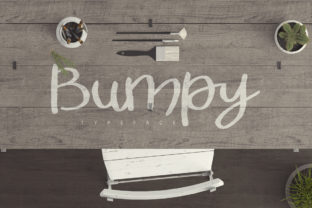
Bumpy is not another geometric sans-serif or a polished script. It’s a cute hand-drawn font where each character feels like it was sketched with a marker on rough paper. The strokes vary slightly, the curves aren’t mathematically perfect, and that inconsistency is where the charm lives. For anyone who works with visuals — entrepreneurs, bloggers, educators — using Bumpy signals that you’re approachable, creative, and not taking yourself too seriously. It’s the typographic equivalent of a warm smile and a hand-drawn sign.
You can use it for short headlines, product names, banners, or anywhere you want to add a human touch. Because it’s not meant for long body text (small sizes can get muddy), Bumpy shines when you let it be the star of a small but important piece of content.
Small Business Branding That Feels Personal
Imagine you run a small bakery, a vintage clothing shop, or a neighborhood coffee bar. Your logo needs to say “we care about what we do” without sounding like a chain. Bumpy works beautifully on signage, business cards, and packaging. One owner I know used it for the main wordmark on their artisan soap labels — the irregular shapes made each bar look like a limited edition. Customers actually commented on the “handmade feel” of the packaging. That’s the kind of brand response you can’t force with a standard font.
Pair Bumpy with a clean, neutral sans-serif for body copy (like product descriptions or contact info) to keep things readable. The contrast between a playful headline and a simple supporting text creates a professional look that still feels homemade.
Social Media Graphics That Stop the Scroll
In a feed full of perfectly polished ads, something slightly uneven and hand-lettered grabs attention. Bumpy works especially well on Instagram stories, quote cards, and promotional posts for limited-time offers. A freelancer I follow uses it for her “new blog post” announcements — the font makes each update feel like a personal note to her followers instead of a broadcast. If you’re a content creator or marketer, try Bumpy for single-word emphasis (like “Sale,” “New,” or “Free”) overlaid on a photo. The hand-drawn look breaks through the noise without feeling like a billboard.
Event Invitations and Flyers That Don’t Look Generic
Weddings, birthday parties, community workshops — these events call for a font that says “this is a real celebration, not a template.” Bumpy works perfectly on digital invites, printed postcards, or even poster designs for local markets. I’ve seen it used on a flyer for a weekend craft fair, and the font immediately communicated the casual, creative vibe of the event. For formal occasions, you might want something more refined, but for anything that leans playful, handmade, or community-oriented, Bumpy is a natural fit.
Educational and Kids’ Materials That Engage
Teachers, tutors, and homeschool parents know that font choice can affect how kids respond to a worksheet or poster. Bumpy’s friendly, irregular shapes resemble a child’s own handwriting, making learning materials feel less intimidating. Use it for chapter titles, activity headings, or motivational posters in a classroom. A mom who runs a small online reading program told me she switched to Bumpy for her lesson slides, and her students started asking if she drew the letters herself. That kind of connection is gold in education.
Product Labels and Packaging for Small Creators
If you sell handmade candles, bath bombs, or small-batch sauces, your label is often the first thing a potential buyer touches. Bumpy’s cute hand-drawn lettering makes the product feel like it came from a friend’s kitchen rather than a factory. One craft soap maker uses it for scent names (like “Lavender Honey”) on a minimalist white label, and the result is both modern and homey. Just make sure the text is large enough to read at a glance — because of the irregular strokes, small sizes can lose clarity. Stick to 18pt or above for best results.
Digital Products and Printables
Planners, journals, sticker sheets, and digital wall art are huge markets for creators. Bumpy gives your PDFs or JPGs an organic, approachable feel that contrasts nicely with clean layouts. If you sell on Etsy or Gumroad, using this font for preview images or cover pages can increase click‑throughs. Shoppers often associate hand-drawn typography with higher quality and originality. Just remember to check the font’s license — many hand-drawn fonts have specific terms for commercial use in digital products.
What to Think About Before You Use Bumpy
Like any tool, Bumpy works best when you understand its strengths and limits. Here’s what I’ve learned from using it (and watching others use it):
- Legibility comes with size. Don’t use Bumpy for long paragraphs, fine print, or small website body text. It’s a display font — keep it above 18-20pt for on-screen use, and even larger for print.
- Pair it wisely. Combine Bumpy with a neutral, clean font (like Open Sans, Lato, or Montserrat) for balance. The contrast makes both fonts look intentional.
- Check the license. If you’re using Bumpy in a commercial project (logos, products, paid graphics), make sure you have the right license. Many hand-drawn fonts are sold with separate personal and commercial tiers.
- Consider the context. Bumpy is playful and informal. It’s perfect for kids’ products, creative agencies, and lifestyle brands. It’s probably not right for law firms, financial reports, or medical forms — unless you’re deliberately trying to soften a very rigid industry.
- Test on different backgrounds. Because the strokes are irregular, Bumpy can blend into busy patterns or photos. Use a solid color background or a subtle texture to keep the letters readable.
- Don’t overdo it. One or two words in Bumpy is usually enough. Using it for an entire headline block can feel chaotic. Let it be the accent, not the whole meal.
Who Gets the Most Out of Bumpy
From my experience, the people who fall for Bumpy are the ones who need to communicate warmth and creativity quickly. Freelance designers use it to impress clients with a custom feel without spending hours drawing letters by hand. Small business owners use it to build a brand that stands apart from big competitors. Bloggers and content creators use it to make their titles and quotes more memorable. And educators use it to make learning materials that feel more like a conversation than a textbook.
If you’re a hobbyist making invites for a friend’s party, a marketer designing a limited‑run ad, or an entrepreneur building a brand from your kitchen table, Bumpy gives you permission to be a little less perfect — and that’s a powerful thing.
Final Practical Note
Before you download Bumpy (or any hand-drawn font), save a few test files: a logo mockup, a social graphic, and a short quote. That way you can see how it behaves in different sizes and on different backdrops. A font that looks amazing in the preview panel can act differently in real use. Test, adjust, and then commit. Bumpy is a tool that rewards experimentation — the more you use it, the more you’ll see where its hand-drawn character adds exactly the right note. It’s not about being fancy. It’s about being human.