The Mocka Font Family: Hand-Drawn Script for Real Projects
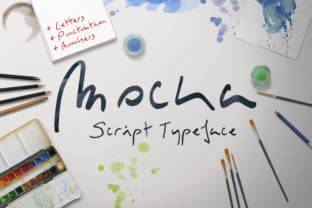
Not every project calls for a stark, mechanical typeface. Sometimes, you need warmth. You need texture. You need the subtle wobble of a line drawn by a human hand. That is precisely where Mocka excels. Mocka is a hand-painted script font family that delivers four distinct voices: Regular, Bold, Light, and Ultralight. Whether you are building a brand from scratch, designing a wedding invitation, or creating content for social media, having a font set that moves beyond one-size-fits-all can change the entire feel of your work.
The four weights of Mocka are not just thinner or thicker versions of the same file. Each weight carries its own personality while retaining the handcrafted DNA of the family. The Ultralight weight feels airy and elegant, perfect for overlays or large, sophisticated headlines. The Light weight carries a similar charm but with a bit more presence on the page. The Regular weight hits a sweet spot of readability and style, while the Bold weight grounds the family with strong, impactful strokes. This range is rare in script fonts, which often come in a single weight.
A Toolbox of Weights for Versatile Design
Having multiple weights in a script font solves a practical problem. Often, a designer finds a beautiful script but struggles to make it work everywhere. A single weight might be too thin to read on a poster but perfect for a business card. Mocka's family structure offers a built-in solution.
Light and Ultralight (Elegance and Airiness)
These lighter weights are best suited for applications where the font can breathe. Think of a high-end cosmetic brand, the title page of a fashion magazine, or a delicate wedding suite. Because the strokes are fine, they need space. Beginners and hobbyists working on personal projects like anniversary cards or digital bullet journals often find the Ultralight weight gives their work a polished, premium look with minimal effort. For the experienced designer, these weights offer a subtle tool for creating hierarchy without introducing a second typeface.
Regular and Bold (Impact and Readability)
The Regular weight is likely the workhorse of the family. It is legible enough for short paragraphs, logos, and social media posts. It retains the hand-scripted charm without sacrificing clarity. The Bold weight, on the other hand, is built for impact. It works beautifully on product packaging, book covers for children's stories, and headlines where you need the words to feel substantial. A small business owner labeling a line of artisan sauces will find the Bold weight adds a sense of quality and handcrafted care.
Who Benefits Most from Mocka's Hand-Painted Style?
Different audiences interact with typefaces based on their goals, deadlines, and technical comfort. Mocka appeals to a broad range because it lowers the barrier to adding a bespoke, artistic touch.
Graphic Designers and Brand Strategists
For you, Mocka is a strategic tool. You value flexibility and quality. Knowing you have a full family (from Ultralight to Bold) allows you to present a unified brand identity. You can use Light for the logo, Regular for website subheaders, and Bold for taglines or product badges. This coherence is difficult to achieve when mixing different script fonts. You also appreciate the organic feel in a landscape saturated with geometric, perfect vectors. Mocka provides that hand-drawn anchor without requiring you to hire a lettering artist for every project.
Small Business Owners and Marketers
Time is often your scarcest resource. Mocka provides an instant aesthetic upgrade. A social media template, a flyer for a local event, or an email newsletter header can be transformed simply by swapping out the default system font for Mocka. The commercial value here is in the perceived effort. A hand-painted font suggests care, artistry, and attention to detail. For the entrepreneur selling handmade goods, this alignment between font style and product type is commercially smart. You do not need to be a design expert to select a weight and see an immediate improvement in your marketing materials.
Educators and Content Creators
In a world of endless digital content, standing out matters. A teacher creating a classroom poster or a digital worksheet needs to capture attention. Mocka's friendly, rounded strokes feel approachable and warm. A YouTube creator or podcaster might use Mocka Bold in their main titles to establish a recognizable, human brand identity. The reliability of the font file ensures a smooth workflow without technical hiccups, whether you are working in Canva, Photoshop, or a video editing suite.
Hobbyists and Creative Beginners
Not everyone buying fonts is a professional. Many are hobbyists looking to beautify a personal project. Mocka is incredibly forgiving for a new user. Because it looks intentionally hand-drawn, slight mismatches in spacing or scale do not ruin the aesthetic—they contribute to the charm. Whether it is a scrapbook layout, a digital painting, or a poster for a family gathering, the Light and Regular weights provide a simple path to great results. The learning value here is in understanding typographic hierarchy without needing a steep technical education.
Practical Applications and Pairing Suggestions
To get the most out of Mocka, consider what you are pairing it with. The hand-painted nature of the font means it thrives when balanced with something clean. A minimalist sans-serif font provides a beautiful structural anchor for Mocka's organic flow.
- For a clean modern look: Pair Mocka Light with a thin sans-serif like Montserrat or Helvetica for a website hero section or a minimalist poster.
- For a rugged, vintage feel: Pair Mocka Bold with a distressed serif or a simple geometric sans in packaging or editorial design.
- For pure elegance: Use Mocka Ultralight on its own, given plenty of white space, on a fine art print, logo, or formal invitation suite.
- For playful branding: Combine Mocka Regular with a rounded sans-serif (like Quicksand) to reinforce a fun, approachable brand identity.
Is Mocka the Right Fit for Your Project?
Asking whether a font fits your project is the most practical question you can ask. Mocka is an excellent choice if your project needs a human, artistic touch, or if you require a script font with multiple weights for genuine flexibility. It shines when you are creating content that should feel approachable, elegant, playful, or handcrafted. If you value ease of use and want immediate visual impact, Mocka delivers.
It might not be the best fit if you need extreme geometric precision, a formal copperplate calligraphy look, or a font optimized for very long body text. Script fonts, by nature, are best used for display purposes—headlines, short phrases, logos—rather than densely packed paragraphs of information.
Making the Investment Work for You
Look for licensing that matches your use case. If your work is primarily digital, check if the foundry offers a web font license. For print-heavy projects, a standard desktop license usually covers your needs. The investment in a family like Mocka, which offers four distinct fonts, often provides more long-term creative value than buying multiple unrelated single-weight scripts. You are not just buying a single look—you are buying a system that scales from elegant (Ultralight) to assertive (Bold).
Ultimately, the best font is the one that helps you communicate your message clearly and beautifully. Mocka, with its hand-painted roots and versatile family, gives you a reliable tool to do exactly that—whether you are designing for millions or just for the joy of creating something personal.