Volstong: A Handmade Brush Font with a Sweet, Personal Touch
When you are selecting a typeface for a project that needs to feel personal, warm, and tactile, the difference between a standard digital font and a handmade brush script can be significant. Volstong is a new entry in this space, offering a sweet, handcrafted aesthetic that is designed to bring a sense of intimacy and charm to printed materials. For anyone evaluating font options for weddings, branding, or special events, understanding what Volstong offers—and where it fits best—is essential for making a choice that aligns with your project’s tone and practical requirements.
What Makes Volstong Distinct
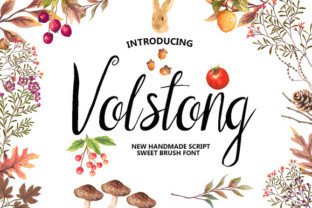
Volstong is a handmade brush font, which means its letterforms are created by actual brush strokes rather than being entirely generated or smoothed by software. This gives it a natural, slightly uneven quality that mimics real handwriting with a brush tool. The “sweet” descriptor is key here: the characters tend to have soft curves, gentle loops, and a lighthearted rhythm that does not feel heavy or overly formal. Unlike rigid, geometric sans-serif fonts or ornate, flour-heavy scripts, Volstong occupies a middle ground—it is playful without being childish, and elegant without being stiff.
One of the most noticeable features is the variation in stroke width. Because each character is based on brush pressure and movement, you see thicker downstrokes and thinner upstrokes, which gives the text a sense of movement and depth. For readers who are used to uniform digital fonts, this variation can make a piece of text feel more organic and approachable. Additionally, Volstong typically includes ligatures and alternate characters, which allow you to adjust the look of certain letter combinations to avoid repetition and maintain a natural flow.
How It Compares to Other Brush and Script Options
When you compare Volstong to other handmade brush fonts, several differences become clear. Many brush fonts lean toward a rough, distressed, or grunge look—they are designed to look like they were painted on a wall or a sign. Volstong, by contrast, is cleaner and softer. It lacks the heavy ink splatters or overly coarse edges that some projects might call for. This makes it a better fit if you want a handmade feel that remains readable and refined.
Compared to formal calligraphy scripts, Volstong is less structured. Formal scripts often have strict guidelines for letter angles and spacing, creating a very uniform, almost architectural appearance. Volstong relaxes those rules, which gives it a more casual and friendly tone. If you are choosing between a formal script and Volstong for a wedding invitation, think about the overall mood: a black-tie gala might call for a precise calligraphy font, while a backyard garden wedding could be better served by Volstong’s warm, unhurried style.
Another important comparison is with standard handwritten fonts that are not brush-based. Some handwritten fonts simulate pen or pencil writing, which tends to produce very fine, even lines. Volstong’s brush influence gives it a bolder presence and a more substantial feel. It stands out better on a page and carries more visual weight, which is useful for headlines or short lines of text where you want the lettering to be a focal point.
Strengths and Best-Fit Situations for Volstong
The primary strength of Volstong lies in its emotional tone. It communicates warmth, care, and a human touch. For projects where you want the viewer to feel a personal connection, this font can be a valuable asset. Wedding invitations are an obvious use case: the couple often wants their stationery to reflect the unique, personal nature of their celebration, and a handmade brush font like Volstong can convey that sincerity more effectively than a mass-produced, generic typeface.
Birthday cards, especially for adults, benefit from this font as well. A card that uses Volstong feels less corporate and more like something you might write by hand, even if it is printed. Posters for events like art fairs, farmers’ markets, or community gatherings also match well with the font’s character. The soft brush strokes suggest creativity and local flavor, which can help a poster feel inviting rather than commercial.
Cafes and small businesses often use brush fonts for signage, menus, and promotional materials. Volstong can work well for a chalkboard-style menu or a printed flyer for a seasonal special. Its readability is high enough for short phrases, and its charm can reinforce a brand image that is friendly, artisanal, and approachable. T-shirt designs are another area where Volstong shines—especially if the design is built around a single word or a short, uplifting phrase. The brush texture adds visual interest to fabric prints, and the sweet tone of the letters can make the message feel more genuine.
Tradeoffs You Should Consider
No single font works perfectly for every scenario, and Volstong has limitations that are important to weigh. The most significant tradeoff is readability at very small sizes or in long blocks of text. Brush fonts, by nature, have irregular spacing and stroke widths, which can make them more difficult to read when the type is small or when there are many words in a row. For body text in a brochure or a lengthy paragraph on a poster, Volstong may tire the reader’s eyes. In those cases, pairing it with a clean, neutral sans-serif font for the body copy is a practical solution.
Another limitation is formality. If your project requires a strict, professional, or corporate tone—such as a legal document, a formal report, or a luxury brand that aims for minimalist sophistication—Volstong’s sweet, handmade quality may feel out of place. It can undermine the seriousness of the message or clash with a sleek visual identity. Similarly, if you are designing for an audience that prefers modern, geometric, or ultra-clean aesthetics, Volstong might read as too nostalgic or sentimental.
There is also the question of versatility across mediums. While Volstong works well on paper and fabric, its performance on digital screens can vary. The fine details of a brush font may be lost on low-resolution displays or in very small digital sizes, such as mobile app interfaces. For web use, you would need to test the font carefully at different sizes and on different devices to ensure it remains legible and attractive.
When Volstong May Be the Right Choice
Volstong is an excellent choice when your project centers on a personal message or a celebration. If you are creating a wedding invitation suite, and the couple wants their personality to shine through the stationery, Volstong provides a balance of elegance and informality that is hard to achieve with other font categories. It also works well for one-off items like a custom birthday card, a thank-you note, or a wall print with a meaningful quote.
For branding, if your business identity is built around handmade goods, organic products, or creative services, Volstong can reinforce that image. A bakery, a flower shop, a children’s book author, or an artisan craft seller could all use this font to signal that their work is crafted by hand and infused with care. In these contexts, the font is not just a decorative element—it becomes part of the brand’s story.
When You Might Need a Different Option
For projects that demand high legibility across large volumes of text, formal tone, or maximum versatility across digital and print platforms, you should consider alternatives. A standard serif or sans-serif font will provide consistent readability and a neutral, professional appearance. If your project involves dense text, such as a newsletter, a magazine article, or a multi-page brochure, reserve Volstong for headings or accent phrases and use a simpler font for the main content.
Also, if your design style leans toward minimalism, modernism, or industrial aesthetics, Volstong’s sweetness may clash with your visual language. In that case, a geometric sans-serif or a clean slab serif would likely be a better fit. Similarly, if your audience is primarily older adults who may have difficulty reading decorative fonts due to vision changes, prioritize clarity over ornamentation.
Making a Practical Decision
Choosing Volstong ultimately comes down to matching the font’s personality with your project’s purpose and audience. Start by identifying the emotional tone you need: is it warm, personal, and inviting? If yes, Volstong is worth considering. Then evaluate the reading context: will the text be short, prominent, and printed at a medium or large size? If yes, the font’s strengths will shine. If you need to convey professionalism, handle large volumes of text, or ensure readability on small digital screens, look for a complementary font pair or select a different primary typeface.
It can also be helpful to test Volstong in a mockup of your actual project. Print a sample invitation, menu, or poster at full size, and show it to a few people whose design judgment you trust. Pay attention to how easily they can read the text and how they describe the feeling the font gives them. Their feedback can reveal whether Volstong’s unique qualities are serving your message or distracting from it.
Volstong offers a distinctive, handmade brush aesthetic that fills a specific niche in the font landscape. It is not a universal solution, but for the right projects—ones that value warmth, personality, and a sweet touch—it can be a powerful tool. By considering its strengths, tradeoffs, and best-fit situations, you can make an informed choice that supports your creative goals and resonates with your audience.