Pubinie: A Delicate Balance Between Clean Lines and Playful Character
In the vast landscape of typography, finding a typeface that feels both clean and characterful can be a challenge. Many fonts lean heavily toward strict geometric precision or highly expressive hand-drawn strokes, but few manage to blend these qualities so seamlessly as Pubinie. Created with very thin lines, this font might initially read as fragile, but its refined execution gives it a surprisingly polished and airy presence. At the same time, because each letterform has been hand-drawn, there is an underlying sense of playfulness that prevents it from feeling sterile. Understanding what makes Pubinie distinct—and how it compares to other options in its category—can help you decide whether it fits your next project, whether you're designing a logo, building a website, or curating editorial content.
The Core Identity of Pubinie: Thin, Clean, and Handcrafted
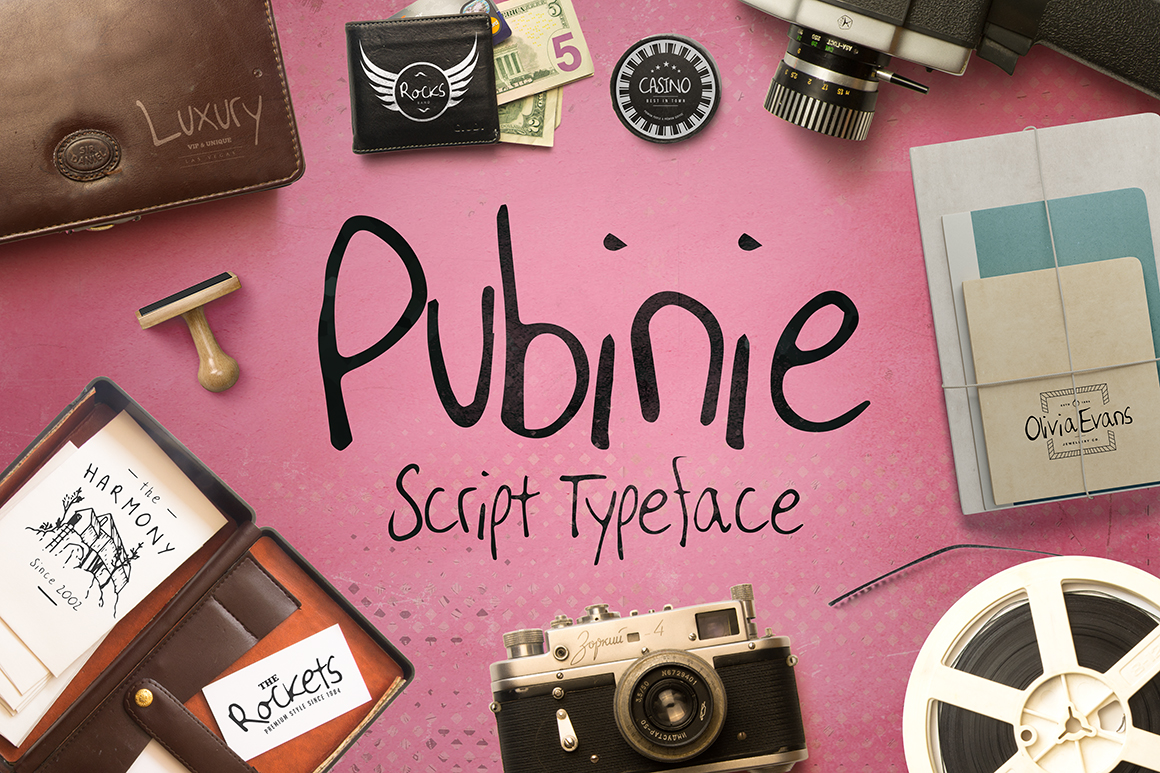
Pubinie’s defining feature is its consistent, delicate stroke weight. The thin lines are not merely aesthetic—they contribute to a sense of lightness and modern minimalism. However, what makes this font truly noteworthy is how it avoids the fragility that often accompanies ultra-light typefaces. The letter structures are carefully proportioned, with open counters and generous spacing that ensure legibility even at smaller sizes. This balance suggests a confident, well-thought-out design rather than a wispy or tentative one.
The hand-drawn quality adds another layer. Unlike purely geometric fonts, Pubinie contains subtle irregularities—slight variations in curves, gentle tilts in ascenders, and organic joins—that give it a human touch. This combination means it can work in contexts where you want a refined, almost feminine elegance without sacrificing approachability. It is a font that invites the reader in, but doesn't shout for attention.
Where Pubinie Fits Best: Strengths and Ideal Use Cases
Given its characteristics, Pubinie excels in several specific scenarios:
- Branding for lifestyle or creative businesses: Its clean yet playful nature suits boutiques, stationery brands, beauty products, or anything that wants to convey a sense of curated warmth.
- Editorial headers and pull quotes: In magazines or blogs, Pubinie acts as a distinctive accent font without overwhelming body copy. Its thin lines look striking when used at larger sizes.
- Invitations and save-the-date cards: The hand-drawn feel adds a personal, crafted element, while the clarity keeps the information readable.
- Product packaging: For products that emphasize natural ingredients, artisan methods, or a gentle aesthetic, Pubinie communicates sophistication without being cold.
In each of these cases, the font works best when you have adequate whitespace around it. Because its strokes are thin, crowding it with dense text or busy graphics can undermine its impact. Pairing it with a more sturdy, readable font for body copy—such as a clean sans-serif or a light serif—can create a satisfying contrast.
Weighing Tradeoffs: Strengths and Limitations
No font is perfect for every situation, and understanding Pubinie’s tradeoffs is crucial for making an informed choice. On the positive side, its delicate lines make it extremely eye-catching in display settings. It can also convey a sense of premium quality, especially when printed on high-quality paper or displayed on high-resolution screens.
However, there are limitations to consider:
- Legibility at very small sizes: While the font is surprisingly readable for its weight, using it for body text below 10–12 pixels on screens, or below 9–10 points in print, can cause the thin strokes to disappear or become indistinct. If your project requires extensive small text, you may need a different primary typeface.
- Visual weight balance: When combined with heavy graphic elements or dark backgrounds, Pubinie can feel lost. It thrives in minimal, light-filled compositions. If your design relies on dense imagery or strong colors, consider using Pubinie only as an accent or in large sizes.
- Font loading and rendering: On some devices, very thin fonts may render poorly—especially in older browsers or on low-resolution screens. Testing across environments is advisable before committing.
These limitations do not detract from the font's charm; they simply guide where it will perform best. Many typefaces with a hand-drawn quality face similar constraints, but Pubinie’s clean construction keeps those constraints manageable.
Comparing Pubinie to Similar Font Styles
When evaluating Pubinie, it helps to compare it to other categories of type that share some of its qualities. The three most relevant comparisons are: ultra-light sans-serif fonts, hand-drawn script or display fonts, and geometric thin fonts.
Ultra-Light Sans-Serif Fonts
These typefaces (like the lighter weights of Helvetica Now or Futura) also offer thin strokes and a clean appearance. They are often mathematically precise, with perfectly straight lines and uniform curves. While they are exceptionally legible and scale well, they lack the hand-drawn warmth that Pubinie provides. For brands that want a purely modern, technical, or corporate feel, an ultra-light sans-serif may be a better choice. Pubinie, with its subtle irregularities, is better suited for projects that need a personal or organic touch.
Hand-Drawn Script and Display Fonts
Many hand-drawn fonts emphasize expressiveness—think of cursive variations with dramatic flourishes or rough, sketched lines. These can be highly evocative, but they often sacrifice readability, especially in all-caps or in longer passages. Pubinie occupies a middle ground: it has the charm of being handcrafted, yet retains the clarity and structure of a conventional typeface. If you need a playful element but do not want to compromise on legibility for your audience, Pubinie becomes a strong candidate.
Geometric Thin Fonts
Geometric fonts like those in the DIN or Century Gothic families are built from simple shapes. When used in thin weights, they can appear very sleek and modern. However, they often feel impersonal. Pubinie’s hand-drawn nature gives it a different kind of visual texture—a softness that can evoke nostalgia or artisanal quality. For designs where emotion and approachability are key, Pubinie offers an edge over cold geometry.
Making the Decision: Is Pubinie Right for You?
Choosing a typeface should be driven by the message you want to convey and the environment in which your audience will encounter it. Ask yourself a few questions:
- What is the primary medium? For high-end print projects (business cards, book covers, invitations), Pubinie shines. For heavy-duty web use, especially on mobile, consider pairing it with a more robust font for body text.
- What feeling do you want to evoke? If you need something that feels both clean and whimsical, light and friendly, Pubinie aligns well. If you need authority, urgency, or a classic formality, you may lean toward a different style.
- How much text will be set in it? Pubinie is best reserved for headlines, short blocks, or decorative use. For long reading, choose a complementary partner.
Practical Examples
Imagine you are designing a portfolio website for a photographer who specializes in minimalist, natural-light portraits. Using Pubinie for the main site title and navigation could reinforce the clean, organic aesthetic. For the descriptive text under each image, a simple sans-serif like Inter or Lato would ensure readability while not distracting from the photos.
Conversely, for a children’s book cover, Pubinie could add a playful, hand-drawn vibe. However, if the interior text needs to be large and easy to read for young eyes, you would likely choose a more robust font (such as a rounded sans-serif) and reserve Pubinie for the cover and chapter headings.
Final Considerations
Pubinie is a thoughtful typeface that succeeds by balancing two often opposing qualities: thin, clean lines and a hand-drawn, playful spirit. It is not a one-size-fits-all solution, but it offers a unique tool for designers who want to add personality without sacrificing polish. By understanding its strengths—especially in display and accent roles—and being mindful of its limitations in small sizes or dense layouts, you can use Pubinie to create projects that feel both modern and inviting. Whether you choose it as your primary header font or as a subtle detail in a larger system, its delicate construction and human touch can bring a distinct sense of charm and clarity to your work.