Jody and the Acrylic Aesthetic: Why a Font with a Painterly Feel Is Reshaping Visual Communication
In a landscape where digital design often strives for hyper-realism or pixel-perfect minimalism, a quieter but equally compelling movement is gaining traction—one that embraces tactility, imperfection, and material warmth. At the center of this shift is Jody, a typeface that brings the unmistakable feel of acrylic to the screen. For professionals, creators, and marketers alike, Jody offers more than a fresh look; it signals a broader rethinking of how fonts can evoke physical presence in an increasingly virtual world.
This article explores what Jody is, why it matters, and how its acrylic-inspired character aligns with changing expectations in branding, content creation, and user experience. We will also examine practical applications, the cultural context behind the demand for textured typography, and what the rise of fonts like Jody tells us about where visual communication is headed.
What Is Jody? A Typeface with an Acrylic Soul
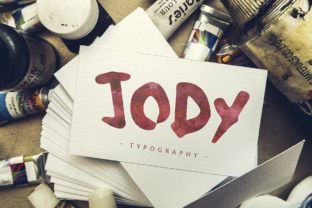
At its core, Jody is a typeface designed to replicate the visual and tactile qualities of acrylic paint or acrylic-based lettering. Unlike standard digital fonts that prioritize clean vector edges and uniform stroke widths, Jody introduces subtle irregularities, slight opacity variations, and a matte, layered finish that mimics the behavior of acrylic medium on a physical surface. The result is a font that feels handcrafted, dimensional, and alive—without sacrificing readability or versatility.
The “acrylic feel” is not merely a decorative gimmick; it is intrinsic to Jody's design philosophy. Acrylic, as a medium, is known for its quick-drying nature, its ability to hold crisp edges while also allowing for soft blends, and its characteristic semi-gloss sheen. Jody translates these properties into typography. Letterforms may appear to have been applied with a brush or a palette knife, with subtle texture along their edges and a slight translucency that lets background colors peek through in a way that suggests layering rather than flatness.
This makes Jody particularly effective in contexts where the audience is meant to feel a connection to the maker—where the hand of the artist, designer, or brand should be felt, not hidden behind perfect geometry.
The Broader Shift: Why Material-Focused Typography Is on the Rise
The emergence of Jody as a notable typeface is not an isolated event. It is part of a larger trend in design that values material authenticity and sensory richness over sterile perfection. For years, the dominant aesthetic in digital design has been flat, clean, and minimal—think Swiss-style grids, sans-serif uniformity, and icon-based interfaces. While that approach remains influential, professionals across industries are beginning to seek alternatives that better reflect human imperfection and emotional nuance.
Several factors are driving this shift:
- The saturation of minimalism: After a decade of flat design, many audiences have become desensitized to its sameness. Brands and creators are looking for ways to stand out without resorting to gimmicks. A font like Jody offers a subtle but powerful differentiator.
- The hunger for tactility in digital spaces: As screens mediate more of our daily interactions, there is a growing desire for visual cues that mimic physical experiences. Acrylic textures, paper grain, clay-like forms—these bring a sense of touch into the visual realm.
- The authenticity imperative in branding: Modern consumers are adept at detecting inauthenticity. Handcrafted and imperfect visuals—including textured typography—signal that a brand is human-led, not corporate-driven.
- The rise of hybrid workflows: Creators increasingly combine analog and digital tools. Photographing painted lettering, scanning textures, and then refining them in software has become common. Jody streamlines that process by delivering the acrylic look natively as a digital typeface.
In this context, Jody is not just a typeface; it is a response to a cultural and commercial need for warmth, authenticity, and material connection in a screen-dominated world.
Why People Are Paying Attention to Jody
Professionals from diverse fields are taking notice of Jody for reasons that go beyond aesthetics. Let’s explore the key drivers behind its growing relevance.
Versatility Across Media
Unlike some heavily stylistic fonts that only work in display contexts, Jody performs well across a range of applications. Its acrylic qualities shine in large headings and hero imagery, where the texture and layering can be fully appreciated. At the same time, Jody retains enough clarity to be used in shorter body passages, subheads, labels, and callout boxes. For marketers and content creators, this means fewer typeface switches within a single project, resulting in a more cohesive visual identity.
A Natural Fit for Social and Digital Content
Social media feeds, website headers, and video thumbnails are crowded visual environments. To cut through the noise, content needs to communicate instantly and memorably. Jody’s acrylic texture gives it a distinctive presence that registers at a glance. Whether used in an Instagram story title, a YouTube thumbnail, or a landing page headline, the font adds a layer of depth that standard fonts cannot match. For freelancers and entrepreneurs managing their own brand presence, Jody offers a way to elevate content without needing advanced design skills or custom illustration.
Alignment with the Maker and Craft Movements
The broader cultural interest in handmade, artisanal, and craft-based goods has created a natural audience for Jody. From independent coffee brands to small-batch product labels, businesses that emphasize craftsmanship find that Jody visually reinforces their values. The typeface communicates care, intentionality, and a human touch—qualities that are increasingly prized in a mass-produced world.
Practical Applications: Where Jody Excels
Understanding the theory behind Jody is useful, but professionals need to know where and how to deploy it effectively. Here are several practical contexts where the acrylic feel of Jody delivers measurable impact.
Brand Identity and Logo Design
For startups and established brands alike, a logo is often the first point of contact with an audience. A typeface like Jody can ground a logo in a tactile, approachable aesthetic. When paired with a muted color palette and matte finishes, Jody helps create a brand identity that feels both modern and timeless. Consider a small-batch skincare line: Jody set on a soft cream background with subtle shadowing can evoke the texture of a hand-poured balm or a ceramic jar. The font becomes synonymous with the product's material quality.
Editorial and Content Design
In editorial contexts—whether print or digital—Jody can be used to create visual hierarchy and thematic consistency. Imagine a quarterly report for a creative agency: Jody used in section titles and pull quotes can break up dense information with moments of visual warmth. For bloggers and newsletter writers, Jody in header graphics can establish a recognizable visual signature that readers come to associate with thoughtful content.
Packaging and Labeling
Physical packaging is one of the most direct applications for a font with an acrylic feel. Products that emphasize natural ingredients, handmade processes, or artistic presentation benefit from Jody’s painterly quality. It works particularly well on labels for apothecary items, gourmet foods, and specialty beverages. The texture of the typeface complements the physical texture of the packaging materials—think kraft paper, glass, or matte plastic.
Presentation and Pitch Decks
Entrepreneurs and freelancers who regularly pitch to clients or investors know that differentiation matters, even in a deck of slides. Using Jody sparingly—for a cover slide, a key statistic, or a section break—can add a level of polish and personality that sets a proposal apart. It signals that the presenter has invested thought into every detail, including typography.
Changing Workflows and Expectations in Typography
The adoption of Jody also reflects a deeper shift in how professionals approach type selection. In the past, choosing a font was often a matter of category—serif for tradition, sans-serif for modernity, script for elegance. Today, the criteria are more experiential. Designers ask not just “What does this font say?” but “How does this font feel? What material does it evoke? What mood does it create?”
Jody fits into this evolving framework by offering a clearly defined sensory profile. It is not a Swiss-style neutral; it is a typeface with personality and material memory. This makes it easier for professionals to align typography with brand personality and user expectations. For marketers, the ability to choose a font that carries an implicit material story can simplify the process of building a cohesive visual narrative.
Moreover, as tools for prototyping and design collaboration become more sophisticated, the demand for expressive, textured typefaces will only increase. Jody represents an early but mature example of what is possible when font design crosses into the territory of material simulation.
Connecting Jody to Larger Trends in Consumer Expectations
Beyond the design industry, the rise of Jody is connected to broader shifts in consumer behavior and lifestyle. Consider the following trends that create a receptive environment for a font like this:
- The experience economy: Consumers increasingly value experiences over products. Typography that evokes the experience of making, painting, or crafting contributes to a brand’s experiential appeal.
- The slow movement: In reaction to fast-paced digital culture, there is a growing appreciation for things that take time and skill. Jody’s handcrafted look aligns with the values of slow design, slow food, and slow living.
- The desire for personalization: Generic templates and stock visuals are losing their appeal. Fonts like Jody enable creators to inject personality into their work without starting from scratch.
- The blur between analog and digital: As more professionals work across both realms, tools that bridge the two—like a typeface that mimics a physical medium—become especially valuable.
In this light, Jody is not just a stylistic choice. It is a strategic tool for connecting with audiences who are seeking more depth, texture, and meaning in the visuals they encounter daily.
Observations from the Field: How Creators Are Using Jody
An emerging body of examples from the creative community shows how Jody is being adopted in real-world projects. Freelance graphic designers have noted that Jody reduces the time spent applying simulated textures in post-production—since the texture is already built into the typeface, the design process becomes more efficient. Brand strategists have pointed out that Jody works especially well for brands that want to appear established but not old-fashioned, artisanal but not rustic.
One independent publishing house recently used Jody as the primary display typeface for a series of poetry books. The acrylic feel complemented the abstract cover art and gave each volume a unique, collectible quality. A boutique agency used Jody in a rebrand for a local ceramics studio, where the font's texture echoed the glaze patterns on the studio's pottery. In both cases, the typeface was chosen not for its trendiness but for its ability to reinforce a core brand message through material resonance.
These examples illustrate a key point: Jody performs best when it is used intentionally, with an understanding of what the acrylic feel brings to the overall communication. It is not a default or a fallback—it is a deliberate choice that rewards thoughtful application.
Looking Ahead: The Future of Textured Typography
The success and growing attention around Jody suggest that textured, material-driven typography will continue to expand. As augmented reality, virtual environments, and spatial computing develop, the need for typefaces that can convey physical presence will grow. Fonts like Jody offer a glimpse into a future where typography is not merely read but felt—where the visual texture of letters contributes as much to the user experience as their legibility.
For professionals and creators, this evolution presents both an opportunity and a challenge. The opportunity is to stand out in a crowded digital landscape by embracing the richness that material typography offers. The challenge is to use these tools with restraint and purpose, ensuring that the texture enhances rather than overwhelms the message.
Jody, with its nuanced acrylic qualities, provides a template for how this balance can be achieved. It demonstrates that a font can be both expressive and functional, both distinctive and versatile. As more designers, marketers, and entrepreneurs recognize the value of texture in visual communication, Jody is likely to become a reference point—not just as a typeface, but as a philosophy of design that respects the material world even as it operates within the digital one.
Conclusion
Jody is far more than a font with an acrylic finish. It is a response to a cultural moment that craves authenticity, tactility, and emotional connection. For professionals across creative and commercial fields, it offers a practical way to infuse projects with warmth and distinction. For entrepreneurs and marketers, it provides a tool for building brand identities that feel human and crafted. And for anyone who creates content in the digital space, Jody serves as a reminder that even the smallest design choices—like the shape and texture of a letter—can shape how an audience experiences and remembers a message.
As the boundaries between physical and digital continue to blur, typefaces like Jody will play an increasingly important role in keeping visual communication grounded, expressive, and engaging. Whether you are a seasoned designer or a freelancer building your first brand identity, Jody deserves a careful look—not just for what it is, but for what it represents: a return to the material, the handcrafted, and the real.