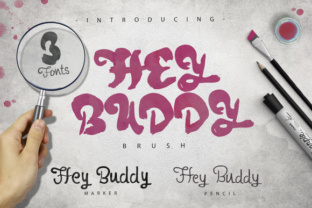
Hey Buddy: A Versatile Font Family for Modern Design and Brand Identity
Typography has never been more central to how we communicate. In a world where attention spans are short and first impressions happen in milliseconds, the typeface you choose can determine whether your message resonates or gets lost. Enter Hey Buddy, a beautifully decorated and stylish font family that offers far more than good looks. It consists of three distinct styles — Hey Buddy Regular, Hey Buddy Brush, and Hey Buddy Pencil — each bringing its own personality while maintaining a cohesive visual language. This article explores why Hey Buddy matters now, how it fits into shifting creative and business workflows, and what practical value it offers to anyone who works with words and images.
What Makes Hey Buddy Different
At first glance, Hey Buddy stands out for its decorative charm. The Regular weight offers a clean yet playful baseline. The Brush variant adds a hand-painted warmth that feels personal and inviting. The Pencil style introduces a sketched, raw energy perfect for informal or educational contexts. Together, these three faces form a system that can adapt across projects without losing its identity. This is not just another display font. It is a thoughtfully crafted toolkit for visual storytelling.
The relevance of Hey Buddy lies in its versatility. Whether you are designing a logo, building a social media campaign, writing a newsletter, or creating classroom materials, having three expressive variations under one family simplifies your workflow. You no longer need to hunt for complementary fonts that may or may not harmonize. With Hey Buddy, the harmony is built in. This matters because modern creators value efficiency and consistency. Juggling multiple font families across different platforms often leads to visual clutter. Hey Buddy solves that problem elegantly.
Why Typography Choices Matter More Than Ever
We live in an era of visual overload. Every day, people scroll past hundreds of posts, ads, and headlines. To stop the scroll, your content needs to feel human. Hey Buddy taps into a growing demand for authenticity in design. The Brush and Pencil styles, in particular, convey a handmade quality that algorithm-driven design often lacks. Audiences today are savvy. They can tell when something feels generic versus when it was crafted with intention. Using a font family that carries personality signals that you care about the details.
This shift toward the authentic and the personal is not just a passing trend. Businesses, educators, and freelancers are all competing for trust. A warm, approachable typeface like Hey Buddy can help lower barriers. It makes your brand feel accessible. It invites people in rather than keeping them at arm's length. For professionals who communicate with clients, students, or followers, this is a powerful advantage.
Another reason typography has gained new attention is the rise of short-form video and visual-first platforms. Even on YouTube thumbnails, Instagram Stories, or LinkedIn banners, the font you choose shapes perception. Hey Buddy Regular works well for headlines that need clarity with style. Hey Buddy Brush adds flair to quotes and callouts. Hey Buddy Pencil feels natural for sketches, brainstorming visuals, or educational diagrams. Each variant serves a specific purpose, and together they cover a wide range of use cases.
How the Hey Buddy Font Family Fits Modern Workflows
Creators and professionals today wear many hats. A freelance graphic designer might also manage their own social media. A small business owner might design their own flyers and website headers. A teacher might create worksheets and classroom posters. In these multi-role scenarios, having a reliable, flexible font family saves time and reduces decision fatigue. Hey Buddy is designed for exactly this reality.
Consider the workflow of a content creator who posts weekly videos on YouTube and shares behind-the-scenes content on Instagram. Using Hey Buddy Regular for the video title card, Hey Buddy Brush for the Instagram quote graphic, and Hey Buddy Pencil for a quick sketch-style explainer creates a consistent brand thread. The audience starts to recognize the visual voice even without seeing a logo. This kind of brand recognition is built through deliberate, consistent choices. The Hey Buddy family makes that consistency easy to achieve.
For marketers, the font family also offers practical benefits. A/B testing often reveals that more human-looking typefaces improve click-through rates on emails and ads. The Brush and Pencil styles convey spontaneity and warmth, which can be especially effective for limited-time offers, event promotions, or product launches. Meanwhile, the Regular weight ensures readability for longer text blocks when paired appropriately. Understanding which style to use in which context is key to maximizing the font's impact.
Practical Examples Across Roles
- Freelance designers can use Hey Buddy Regular for client presentations and portfolio headings. The Brush variant adds a human touch to mood boards. The Pencil style works for wireframe annotations or rough concept sketches.
- Small business owners can rely on Hey Buddy for packaging labels, store signage mockups, and social media graphics. The consistent visual identity builds trust with repeat customers.
- Educators and trainers can create engaging handouts, slides, and classroom decorations. The Pencil style in particular feels approachable for younger audiences or creative workshops.
- Bloggers and newsletter writers can use Hey Buddy for featured images and section headers. It adds personality without overwhelming the reading experience.
The Evolution of Decorative Fonts in Digital Spaces
Decorative fonts used to be reserved for print projects or special occasions. They were often seen as too niche for everyday digital use. But that perception has changed. As design tools have become more accessible, even non-designers are experimenting with typography. Platforms like Canva, Adobe Express, and Figma have democratized design. In this context, a font like Hey Buddy becomes a valuable asset because it is distinctive yet usable. It does not require advanced design skills to look good.
Another evolution is the move away from sterile, corporate aesthetics. Many brands are consciously choosing typefaces that feel more like handwriting or hand-drawn art. This shift reflects a broader cultural preference for transparency and human connection. Hey Buddy Brush and Hey Buddy Pencil align perfectly with this movement. They bring texture and imperfection into a polished digital environment. This contrast is visually interesting and emotionally resonant.
Moreover, the rise of remote work and online learning has increased the need for visually engaging materials. A teacher conducting a Zoom lesson or a manager presenting quarterly results via slide deck can benefit from a typeface that adds energy. Hey Buddy helps break the monotony of standard fonts without sacrificing professionalism. It strikes a balance that many other display fonts miss.
Why Style Versatility Matters Now
The Hey Buddy family's range is especially relevant for brands and creators who need to communicate different moods across different channels. On LinkedIn, a more polished look might be called for, and the Regular weight delivers. On Instagram or Pinterest, the Brush variant can shine. For a behind-the-scenes story or a rough draft, the Pencil style feels honest and relatable. Having all three in one family means you can shift tone without changing your brand's visual DNA.
This flexibility also supports seasonal campaigns or special projects. Imagine a coffee shop using Hey Buddy Regular for its main menu, then switching to Hey Buddy Brush for a limited-time autumn promotion. The continuity is still there, but the tone adapts. This kind of dynamic branding is increasingly expected by audiences who follow brands across multiple touchpoints.
Practical Recommendations for Using Hey Buddy
To get the most out of the Hey Buddy font family, start by identifying your primary use case. If you need clear, legible headings for a professional website or newsletter, lead with Hey Buddy Regular. Use it at larger sizes for maximum impact, and pair it with a simple sans-serif for body text to maintain readability. For instance, combining Hey Buddy Regular with a neutral font like Open Sans or Montserrat creates a balanced hierarchy.
When you want to inject warmth, bring in Hey Buddy Brush. This variant works exceptionally well for short phrases, pull quotes, or call-to-action buttons. Avoid using it for long paragraphs because the decorative nature can reduce legibility at small sizes. Use it sparingly to draw attention where it matters most.
Hey Buddy Pencil is ideal for informal or educational content. Use it for worksheet titles, sketch notes, or playful social media posts. It pairs well with clean, modern fonts to create contrast. For example, a blog post header in Hey Buddy Pencil followed by body text in a simple serif creates a dynamic visual rhythm.
One more recommendation: test the font family across different backgrounds. The Brush and Pencil styles have texture that shows beautifully on solid backgrounds or subtle patterns. The Regular weight is more forgiving and works on both light and dark backgrounds. Always preview your designs on both mobile and desktop to ensure the personality of the font comes through without sacrificing clarity.
Common Mistakes to Avoid
- Using decorative variants for body copy or dense text blocks. Hey Buddy is primarily a display font family. Reserve the Brush and Pencil styles for headings, short phrases, or accent elements.
- Mixing too many styles in one composition. Stick to two variants per design to maintain cohesion. A good rule is one heading style and one accent style.
- Forgetting about contrast. If your background is busy, choose a variant with higher contrast or add a shadow or outline for readability.
The Bigger Picture: Authenticity in Visual Communication
Ultimately, Hey Buddy is more than a pretty font. It reflects a broader shift in how we communicate visually. Audiences are drawn to designs that feel human, imperfect, and warm. The font family's three styles give you the tools to express different facets of that humanity. Whether you are building a brand from scratch or refreshing an existing one, incorporating a versatile, personality-rich typeface like Hey Buddy signals that you understand the value of connection over polish.
This is not about following a trend for the sake of it. It is about recognizing that effective communication in 2025 and beyond requires more than just transmitting information. It requires evoking feeling, building trust, and standing out in a crowded digital landscape. Typography is a foundational tool for achieving that. When you choose a font family as thoughtfully crafted as Hey Buddy, you are investing in clarity, consistency, and emotional resonance.
For professionals, creators, and entrepreneurs who want their work to be remembered, making intentional choices about visual language is no longer optional. It is essential. Hey Buddy gives you a head start by offering three distinctive voices that all speak the same language. The rest is up to your imagination.