Climbing and Climbing Font Duo: Where Handcrafted Ivy Meets Digital Precision
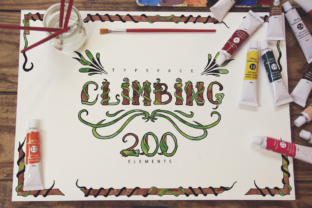
Typography is often the quiet foundation of visual communication. It sets tone, guides attention, and conveys personality before a single word is read. In recent years, designers and creators have moved away from sterile, mass-produced typefaces toward fonts that feel human, textured, and alive. The Climbing font duo embodies this shift with remarkable clarity. Every letter in both Climbing One and Climbing Two has been hand-drawn on paper, then refined digitally, resulting in two distinct typefaces wrapped in delicate ivy. This is not simply another decorative font set. It is a deliberate fusion of traditional craftsmanship and modern usability.
What Makes Climbing Different from Standard Decorative Fonts
Most decorative fonts rely on digital filters or automated embellishments. Climbing starts from a different place. Each glyph was originally crafted by hand on paper. The organic imperfections of pencil or ink strokes were preserved, then carefully perfected in the digital space. The ivy that adorns every letter is not a generic overlay. It is integrated into the anatomy of each character, flowing along stems, curves, and serifs in a way that feels intentional rather than applied as an afterthought.
Climbing One and Climbing Two offer variation within a cohesive family. One may lean toward a more ornate, trailing ivy aesthetic, while the other provides a slightly more restrained elegance. Together, they give designers flexibility without breaking visual consistency. This duo structure is particularly useful for projects that need a primary display face and a complementary companion for subheadings or accents.
The Craft of Hand-Drawn Letters in a Digital Age
There is a growing appreciation for imperfection in design. Audiences are tired of frictionless, robotic visuals. They want evidence of a human hand. The Climbing font duo delivers exactly that. Each letter carries subtle irregularities in line weight, curve tension, and ivy placement that would be impossible to achieve through algorithmic generation alone.
For professionals working in branding, packaging, or editorial design, this human quality translates into authenticity. A brand that uses a handcrafted typeface signals care, patience, and a respect for detail. It suggests that the company or individual behind the work values quality over speed. In an era where automation is everywhere, such signals matter more than ever.
How Climbing Fits into Current Design Trends
Several converging trends make the Climbing font duo particularly relevant right now. First, there is the resurgence of botanical and nature-inspired aesthetics in visual culture. From interiors to logos, leaves and vines have become shorthand for sustainability, organic living, and a slower pace of life. The ivy motifs in Climbing tap directly into this visual language without feeling clichéd, because they are embedded into the letterforms themselves rather than added as separate graphic elements.
Second, the demand for custom and limited-edition feels in mass-market production has never been higher. Consumers and clients alike crave uniqueness. A font like Climbing allows even a small business owner or freelancer to produce materials that look individually designed. Whether used on a wedding invitation, a product label, or a social media graphic, the ivy-adorned letters give an immediate sense of curation.
Third, the blending of analog and digital processes continues to fascinate creators. The story behind a font matters. When you choose Climbing, you are not just picking a style. You are referencing a process that involves paper, ink, and human touch, then enhanced by digital tools for consistency and scalability. This narrative resonates with audiences who value transparency and craftsmanship.
Practical Implications for Designers and Business Owners
For a graphic designer, having a font duo like Climbing in your toolkit means you can deliver distinctive work without spending hours creating custom lettering. It reduces the gap between concept and execution. You can pair Climbing One for headlines with Climbing Two for body text or decorative elements, maintaining a unified botanical theme throughout a project.
For business owners, especially those in industries like floristry, lifestyle brands, cafes, wedding planning, or organic products, the Climbing font duo offers an immediate visual identity. A logo set in Climbing communicates elegance, natural inspiration, and attention to detail. It helps a brand stand out in crowded marketplaces where so many competitors rely on generic sans-serif or script fonts.
Even for educators and hobbyists, the duo provides a way to create professional-looking materials for personal projects. A blog header, a handmade card, or a presentation slide can be elevated simply by using a typeface that carries such intentional ornamentation. The ivy detail does not overpower the text. Instead, it enhances legibility by framing each letter in a way that draws the eye naturally along the reading path.
Why People Are Paying More Attention to Typeface Details
Typography has always been important, but the rise of remote work, digital content creation, and personal branding has made it more visible. A decade ago, most people did not think about the fonts they used in everyday documents. Now, with tools like Canva, Adobe Express, and even Google Docs offering extensive font libraries, even non-designers are becoming type-conscious.
This broader awareness means that the details matter more. A font like Climbing does not blend into the background. It makes a statement. For users who are tired of the same dozen fonts appearing everywhere, the Climbing duo offers a fresh, distinctive alternative that still reads clearly. The ivy does not compromise legibility because it is designed as part of the letter rather than as an obstacle.
In addition, the sustainability and mindfulness movements have encouraged people to slow down and appreciate craft. Choosing a handcrafted font aligns with a mindset that values quality, durability, and the story behind an object. This is true whether you are designing a logo for a client or creating a personal project that reflects your tastes.
Evolution of Decorative Fonts: From Ornament to Function
Decorative fonts have existed for centuries, from illuminated manuscripts to Victorian display types. However, they were often impractical for extended reading. The Climbing font duo evolves this tradition by balancing ornament with function. The ivy is present on every letter, but it is handled with restraint. The letterforms remain clear and recognizable. You can use Climbing for short paragraphs or single words without losing readability.
This evolution reflects a broader change in design philosophy. Ornament is no longer seen as frivolous. When executed well, it adds meaning, emotion, and memorability. Climbing proves that a highly decorative typeface can still be a workhorse in the right context. The duo format extends that utility further by giving users two complementary voices within the same visual family.
Realistic Recommendations for Using Climbing Effectively
To get the most out of the Climbing font duo, consider the following practical observations:
- Pair with neutral backgrounds. Because the letters themselves carry intricate ivy detail, a clean background lets the typeface shine without visual competition. White, cream, or muted earth tones work well.
- Use sparingly for emphasis. Climbing One and Climbing Two are most impactful when used for headlines, logos, short quotes, or key phrases. For large blocks of body text, consider a simpler companion font to avoid fatigue.
- Test at different sizes. The ivy details become more apparent at larger sizes. At smaller sizes, the letters remain readable but some subtle vine work may compress. Always preview your layout before finalizing.
- Consider the medium. On screen, the fonts retain their handcrafted feel. In print, the detail can be even more striking. If you are printing, choose a paper stock that complements the botanical theme, such as uncoated or textured paper.
- Match the tone of your content. Climbing works beautifully for romantic, natural, elegant, or heritage-themed projects. It may feel out of place in very technical, corporate, or minimalist contexts unless used sparingly as a contrast element.
Who Will Benefit Most from This Font Duo
Professionals in branding and identity design will find the duo invaluable for creating distinctive visual systems. Freelancers and small business owners can use it to differentiate themselves without hiring a lettering artist. Bloggers and content creators looking to establish a consistent aesthetic will appreciate having two matching fonts that cover both headings and decorative accents. Educators making course materials or worksheets with a nature theme can add visual interest that engages students. And hobbyists working on invitations, journals, or personal art projects will enjoy the depth and character that handcrafted ivy type brings to their work.
Ultimately, the Climbing font duo represents a thoughtful intersection of old and new. It honors the slow, careful process of drawing letters by hand, while embracing the precision and utility that digital type demands. For anyone who believes that typography should be both beautiful and meaningful, Climbing One and Climbing Two offer a rare combination of artistry and practicality. Whether you are designing for a client, a business, or simply for yourself, these fonts invite you to slow down, look closely, and let the ivy do its quiet work.