Melancolie: Where Organic Imperfection Meets Script Elegance in Design
The Aesthetic Power of Imperfect Edges
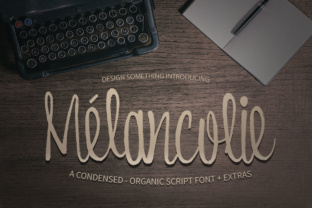
Typography often strives for precision, for mathematically perfect curves and flawlessly smooth outlines. Melancolie takes a different path. As a condensed script font, it embraces what makes handwritten lettering feel alive: the perfectly imperfect edge. This is not a flaw in the design but a deliberate feature that gives each character a tactile, almost physical presence. When you work with Melancolie, you are not simply placing text on a canvas; you are introducing an organic element that interacts with its surroundings in a way that sterile, ultra-polished fonts rarely do. The slight irregularities along each stroke create micro-shadows and subtle depth variations that make the lettering feel inked rather than rendered.
How Melancolie Blends with Diverse Backgrounds
One of the most striking characteristics of this typeface is its ability to harmonize with an extraordinary range of background treatments. Whether you place it over a rough textured paper, a muted gradient, a photographed surface, or a bold geometric pattern, Melancolie maintains its legibility while integrating into the visual fabric. The reason lies in those imperfect edges: they catch the eye differently depending on the substrate. On a dark background, the irregular contours produce a softened glow rather than a harsh cutoff. On a light, busy background, the condensed structure keeps readability intact while the organic edges prevent the type from looking pasted on. This adaptability makes Melancolie a versatile tool for anyone who works across multiple media formats.
Branding and Identity Work
Business owners and brand strategists often search for a typeface that conveys authenticity without sacrificing professionalism. Melancolie fits this brief naturally. A boutique coffee roaster, a handcrafted soap maker, or a small-batch distillery can all benefit from the font's condensed script form. It suggests tradition, care, and human involvement. When used on packaging, the font does not fight with the product photography; instead, it sits comfortably alongside textures like kraft paper, linen, or wood grain. For digital branding, the same organic quality translates into logos that feel less corporate and more approachable.
Editorial and Publication Design
Magazine editors and layout designers frequently face the challenge of making headings stand out without overwhelming the page. Melancolie excels in pull quotes, chapter headers, and decorative initials. Its condensed nature means it occupies less horizontal space, allowing more room for imagery or body text. At the same time, the script style adds a literary, almost nostalgic tone. A travel magazine feature on rural landscapes, a literary journal essay on memory, or a recipe collection for heritage dishes all gain a layer of emotional resonance when key typographic elements use Melancolie.
Digital Content and Social Media
Creators and content marketers know that scroll-stopping visuals require more than a pretty image. Typography choices directly influence how long a viewer pauses. Melancolie works well in Instagram stories, YouTube thumbnails, and blog hero images because its imperfect edges read as handmade and sincere. In a feed full of clean sans-serif generic fonts, a Melancolie headline stands out not by shouting but by whispering something crafted. For educators producing digital worksheets, planners, or course materials, the font lends a warm, inviting feel that encourages engagement rather than detachment.
Who Benefits Most from Using Melancolie
The audience for this typeface is broader than one might initially assume. Hobbyists who run small Etsy shops or create personal stationery sets appreciate how easily Melancolie elevates a simple design. Researchers preparing conference posters or presentation slides can use the font to humanize data-heavy content, softening the clinical feel of charts and graphs. Educators developing classroom materials find that the script style appeals to younger audiences while remaining legible at moderate sizes. Professionals in advertising and graphic design use Melancolie as a counterpoint to rigid corporate typography, introducing a touch of warmth without descending into frivolity. Even business owners with no formal design training can implement it effectively because the font does most of the aesthetic work on its own.
Consider a wedding invitation suite. The couple wants something elegant yet personal. A Melancolie heading paired with a clean serif body creates a contrast that feels curated. The imperfect edges echo the handmade nature of letterpress or calligraphy, but the condensed structure ensures that names, dates, and locations fit neatly into standard card dimensions. For event planners, this means fewer layout headaches and more consistent results across save-the-dates, programs, and thank-you notes.
Pairing with Other Typefaces
Because Melancolie carries a strong personality, it benefits from thoughtful pairing. A neutral sans-serif like a geometric circular font or a clean humanist sans creates breathing room. The goal is to let Melancolie lead while the companion typeface supports. Avoid pairing it with another elaborate script or a highly decorative serif, as the visual competition undermines the organic effect. Instead, think of Melancolie as the focal point in a typographic composition, much like a piece of handmade jewelry set against a simple fabric.
Size and Spacing Adjustments
The condensed nature of Melancolie means that at smaller sizes, careful tracking and leading adjustments are necessary. For body text alternatives, you may want to increase letter-spacing slightly to prevent strokes from merging visually. For headings, the opposite can be true: tighter spacing emphasizes the script flow and creates a ribbon-like effect. Testing at different scales is essential, especially if the final output will appear both on screens and in print. A logo that looks balanced on a business card may need re-proportioning for a website header.
Color and Effect Integration
The imperfect edges of Melancolie respond beautifully to treatments like drop shadows, glows, and embossing. A soft shadow cast slightly downward mimics how ink sits on paper, enhancing the handmade feel. Gradient fills work particularly well because the irregularities in the letterforms catch color transitions in unpredictable ways, adding depth. For screen-based projects, a subtle texture overlay on the font layer can amplify the organic quality. Print designers can achieve similar results through spot varnishes or foil stamping, where the edge imperfections become tactile highlights.
Contrasting Melancolie with Other Font Categories
Understanding where Melancolie fits within the broader typography landscape helps users make informed choices. Standard condensed sans-serif fonts prioritize efficiency and neutrality; they recede into the background. Standard scripts often lean formal, with smooth connecting strokes that feel automated. Melancolie occupies a middle ground: condensed enough for practical use, script enough for personality, and imperfect enough to feel genuine. It avoids the cold uniformity of digital-first typefaces while retaining the functional virtues that designers require.
Compare it to a brush script, which tends to be wider and more expressive. Melancolie offers a similar human quality but with a tighter footprint, making it more suitable for multi-line layouts or constrained spaces. Compare it to a handwritten sans-serif, which may lack the elegance needed for premium branding. Melancolie brings a level of sophistication that bridges casual and refined. This positioning makes it valuable for projects that need to communicate both approachability and care.
Observations from Real-World Usage
Designers who incorporate Melancolie into their workflows often note that client feedback skews positive, with comments like it looks expensive or it feels personal. Part of this reaction comes from the font's ability to signal effort. In an era when anyone can access thousands of typefaces with a click, the subtle imperfections in Melancolie convey that someone paid attention to detail. A restaurant menu set in this font suggests that the same care goes into the food. A yoga studio flyer implies that the practice is grounded and authentic.
Another common observation is that Melancolie performs well across cultural contexts. Because script lettering carries connotations of handwritten correspondence, it transcends specific design trends. A brand using Melancolie in 2024 may still feel current in 2028, as the organic quality is not tied to a particular geometric fad. This longevity appeals to business owners who want to avoid frequent rebranding cycles. For creators building a personal identity, the font offers stability and recognition without becoming stale.
Workflow Integration Tips
For professionals incorporating Melancolie into their regular toolkit, a few practical strategies emerge. Keep a version of the font installed in both desktop and cloud-based design applications to maintain consistency between drafts and final files. Build a few template projects such as a social media quote card, a product label mockup, and a presentation title slide that use Melancolie as the primary heading font. This allows you to test how it interacts with your most common layouts before committing to a full project. When collaborating with clients, provide style tiles that show Melancolie paired with two or three alternative body fonts, demonstrating the range of moods available.
For educators and workshop leaders, introducing Melancolie in typography exercises helps students understand the role of imperfection in design. A simple assignment: take a block of text, set it in a standard sans-serif, then replace the heading with Melancolie and ask students to describe the change in tone. The exercise reveals how much emotional weight a single typeface can carry. For researchers preparing academic posters, using Melancolie sparingly for the title and key findings draws attention without compromising the professional credibility of the content.
Final Observations on a Versatile Typeface
Melancolie succeeds because it solves a common design dilemma: the need for personality without sacrificing function. Its condensed script structure allows it to appear in places where wider scripts cannot go, while its perfectly imperfect edges ensure it never looks sterile. Whether you are a business owner seeking a brand identity that feels genuine, a creator looking to stand out in crowded feeds, or an educator wanting to make materials more inviting, this typeface offers a reliable foundation. The key is to let it lead where it excels and support it with restraint where it needs space. Used thoughtfully, Melancolie transforms text from a carrier of information into a carrier of feeling.