Trouble: A Script Font That Brings Elegance and Personality to Every Project
When you are looking for a typeface that instantly adds warmth, character, and a handcrafted feel to your work, you want something that stands out without screaming for attention. That is exactly where Trouble comes into the picture. This new script font is more than just a set of letters—it is a carefully designed tool that brings beauty, flow, and a sense of occasion to everything it touches. Whether you are planning a wedding, designing a menu, or building a brand identity, Trouble offers a level of refinement that is hard to find in standard fonts.
What makes Trouble so special is its thoughtful balance between readability and flourish. It does not overwhelm the reader with excessive decoration, yet it clearly carries a personality that says something intentional and crafted. This article explores what Trouble is, what makes it work, and how you can use it effectively in your own projects.
What Exactly Is Trouble?
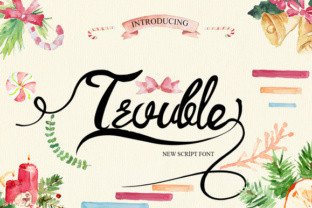
Trouble is a modern script font designed with beautiful swashes that give each letter a graceful, flowing appearance. It belongs to the category of calligraphic or handwritten typefaces, but it has been refined for consistent use across digital and print media. The letters connect naturally, creating a smooth rhythm that mimics the elegance of hand-lettering without the inconsistency of actual handwriting.
The font includes a full set of uppercase and lowercase characters, numerals, punctuation, and a generous selection of swashes and alternates. These extras allow you to customize the look of your text, giving you options for more ornate beginnings or endings, or for varying the style of certain letters to fit the mood of your project. Because it is a script font, Trouble works best when you use it deliberately—for headlines, short phrases, or featured text rather than long paragraphs of body copy.
The Design Philosophy Behind Trouble
The people behind Trouble understood that a script font needs to feel both spontaneous and reliable. Every stroke has been drawn with care so that the letters flow together without awkward gaps or clashing angles. The swashes are not just decorative extras—they are integrated into the design so that they feel like a natural extension of the letterforms. This makes Trouble versatile enough for formal invitations but also approachable enough for casual branding like café signage or T-shirt graphics.
Another important aspect of the design is its legibility. Many script fonts sacrifice readability for style, leaving readers guessing at certain letters. Trouble avoids this pitfall by keeping each character distinct while still maintaining a connected, cursive look. This means your audience can actually read what you have written, which is the whole point of typography in the first place.
Where Can You Use Trouble?
Because of its balanced design, Trouble works across a surprisingly wide range of applications. Here are some of the most common and effective uses:
- Wedding invitations and stationery – The swashes and flowing letters lend a romantic, sophisticated feel that is perfect for save-the-dates, invitation suites, thank-you cards, and place settings.
- Posters and event signage – Whether you are promoting a concert, a gallery opening, or a community fair, Trouble gives headlines a handcrafted, welcoming appearance that draws people in.
- T-shirt and apparel graphics – Because the font has a natural, unforced look, it works beautifully on fabric. A short phrase or a single word in Trouble can become the focal point of a design.
- Café menus and branding – Coffee shops, bakeries, and restaurants often want to communicate warmth and artisanal quality. Trouble helps achieve that without feeling overly formal or corporate.
- Letterheads and business stationery – For professionals who want to convey creativity and attention to detail, using Trouble on letterheads, envelopes, and business cards sets a distinct tone.
- Social media graphics and digital content – Trouble works well for quotes, titles, and featured text on platforms like Instagram, Pinterest, and YouTube thumbnails, where visual impact matters.
- Packaging and product labels – Small-batch products, handmade goods, and specialty items benefit from the personal feel that Trouble brings to labels and packaging.
Real-World Scenarios: Who Benefits Most?
Different people will find different kinds of value in Trouble. Let us look at a few examples:
Event planners often need to produce cohesive, beautiful materials quickly. With Trouble, they can create matching invitation designs, signage, and thank-you cards without hiring a lettering artist. The swashes and alternates give them flexibility to make each piece feel unique while maintaining a consistent brand look.
Small business owners who run boutiques, cafés, or creative studios can use Trouble to build a visual identity that feels personal and memorable. Instead of relying on generic fonts, they can use Trouble for their logo, menu boards, and promotional materials to create a cohesive aesthetic that customers recognize and trust.
Graphic designers and illustrators will appreciate how Trouble integrates into their existing workflows. It works well as a headline font paired with clean sans-serif body text, or as a standalone decorative element in posters and social media graphics. The included swashes and alternates give designers extra creative control without needing to manually draw embellishments.
DIY creators and hobbyists—people making invitations for a bridal shower, designing a custom T-shirt for a family reunion, or creating signage for a garage sale—will find Trouble easy to use and impressive in results. It elevates simple projects with very little effort.
Strengths of Trouble That Stand Out
Several qualities make Trouble a strong choice compared with other script fonts on the market:
- Beautiful swashes that feel intentional, not forced. The swashes are designed to complement the letters rather than distract from them. You can use them sparingly for a subtle effect or more liberally for a dramatic look.
- Excellent readability for a script font. Each letter is clearly distinguishable, which is not always the case with cursive typefaces. This makes Trouble suitable for applications where the text needs to be read quickly, such as posters or social media posts.
- Versatility across media. Trouble works in both print and digital formats. It renders cleanly at various sizes, from large headlines to smaller featured text, and it maintains its character even when scaled down.
- Easy to pair with other fonts. Because it has a distinct but not overpowering personality, Trouble pairs well with many sans-serif, serif, and slab-serif typefaces. This gives you flexibility when building a complete design system.
- Includes a range of alternates and extras. Having multiple options for certain letters or decorative elements means you can customize the look to match your specific project without needing additional software or manual editing.
Considerations and Limitations to Keep in Mind
No font is perfect for every situation, and Trouble is no exception. Being aware of its limitations will help you use it more effectively:
- Not ideal for long body text. Like most script fonts, Trouble is best used for headlines, short phrases, or featured elements. Reading extended paragraphs in a script font can be tiring, and the swashes may become distracting in dense text blocks.
- Works best at medium to large sizes. While Trouble remains readable at smaller sizes, the beauty of the swashes and letterforms is most noticeable when the font is used at 24 points or larger. For very small text, such as fine print or captions, a simpler font may be preferable.
- May not suit every brand or industry. Because Trouble has a distinctly elegant, handcrafted feel, it may not be appropriate for highly formal corporate communications, legal documents, or technical content. It is best reserved for projects where personality and warmth are valued.
- Requires thoughtful spacing and layout. Script fonts with swashes sometimes need extra attention to kerning and line spacing. When using Trouble, it is a good idea to test different arrangements to ensure the letters flow smoothly and the swashes do not collide with adjacent lines or elements.
How to Evaluate Whether Trouble Is Right for Your Project
If you are considering using Trouble, here are a few practical questions to guide your decision:
- What is the tone you want to communicate? If your project calls for elegance, warmth, creativity, or a personal touch, Trouble is a strong candidate. If you need a more neutral, formal, or minimal look, you might consider a different font.
- Where will the text appear? For printed materials like invitations, posters, or packaging, Trouble shines. For digital applications where readability at small screen sizes is critical, test the font on actual devices before committing.
- Who is your audience? Trouble tends to resonate well with audiences who appreciate design, craftsmanship, and attention to detail. It works particularly well for projects aimed at couples planning weddings, food and beverage enthusiasts, or creative professionals.
- How much text do you need to set? For short, impactful text, Trouble is excellent. For longer passages, consider using it selectively—for example, as a heading paired with a clean sans-serif for the body copy.
- Do you have the flexibility to test different swash options? Because Trouble includes multiple alternates, you can tailor the look to your specific layout. Take advantage of these options to find the best combination for your design.
Practical Tips for Using Trouble Effectively
Once you decide to use Trouble, a few simple practices will help you get the best results:
- Pair it with a neutral, simple font for body text. A clean sans-serif like Helvetica, Open Sans, or Montserrat works well, letting Trouble remain the star of the show.
- Use swashes sparingly at first. You can always add more ornamentation later, but starting with a restrained approach ensures the text remains readable and balanced.
- Test your layout at actual size. Whether you are designing a poster, a T-shirt, or an invitation, print a mockup or view it at full scale on screen. This helps you see how the swashes and letter spacing work in real conditions.
- Consider color and background. Trouble works beautifully on light or neutral backgrounds where the delicate strokes are visible. On dark or busy backgrounds, you may need to increase the font size or add contrast to maintain legibility.
- Experiment with letter-spacing and line-height. Script fonts often benefit from slightly looser tracking and generous line spacing, especially when swashes are involved. Do not be afraid to adjust these settings to achieve the best visual flow.
Final Thoughts on Trouble
Trouble is a thoughtfully designed script font that brings genuine elegance and personality to a wide range of projects. Its beautiful swashes, strong readability, and versatile nature make it a valuable tool for anyone who works with text—whether you are a professional designer, a small business owner, or someone creating something special for a personal event.
By understanding what Trouble does well and where it works best, you can make informed decisions that elevate your work and communicate your message with style. Like any good tool, it rewards careful use and thoughtful pairing. When you take the time to choose the right application, Trouble delivers results that feel polished, personal, and memorable.
Whether you are designing wedding invitations that guests will treasure, building a brand identity for your café, or simply adding a handcrafted touch to a poster, Trouble offers the grace and character you need. It is a font that does not just look good—it helps you say something meaningful, and it says it beautifully.