AZ New Rough: A Font That Brings Texture and Character to Your Projects
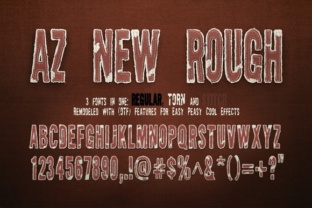
When you’re scrolling through font libraries, a lot of typefaces look polished, smooth, and almost too perfect. That’s why something like AZ New Rough catches your eye right away. It’s not trying to be flawless. Instead, it brings a handmade, stitched feel that works beautifully for projects where you want to add warmth, grit, or a subtle vintage vibe. The font family actually comes in three distinct styles: AZ New Rough Regular, AZ New Rough Thread, and AZ New Rough Torn. Each one offers a slightly different take on that rough, textured aesthetic, making the set incredibly versatile once you start thinking about where you might use it.
What Makes This Font Different?
The core idea behind AZ New Rough is the stitching lines that run through the letterforms. It looks like someone carefully sewed each character onto fabric or paper, leaving behind tiny gaps and uneven edges. That gives it a retro, handcrafted feel that’s hard to replicate with standard distressed fonts. Regular gives you the basic stitched look, Thread emphasizes the sewing effect even more, and Torn adds a worn, ripped quality. Together, they form a toolkit that can evolve from something playful to something that feels genuinely aged.
Where This Font Really Shines
Instead of just describing the font’s features, let’s look at real situations where it can make a difference. Whether you’re a designer, a small business owner, or someone working on a personal passion project, AZ New Rough has a way of showing up exactly where a clean sans-serif would feel boring.
Branding for Artisan and Handmade Businesses
If you run a small bakery, a craft brewery, or an Etsy shop selling handmade soap, you already know that your brand needs to communicate authenticity. AZ New Rough does that effortlessly. Imagine a logo for a local coffee roastery: the name of the roaster set in AZ New Rough Thread, paired with a simple icon of a coffee bean. The stitching lines give the impression that the logo was hand-stitched onto a burlap sack. That visual cue tells customers you care about the craft, not just the product. The Torn variant works especially well for labels on recycled paper packaging or chalkboard-style menus where you want a weathered look that still feels legible.
Event Posters and Flyers
Music festivals, farmers’ markets, and vintage fairs are prime territory for this typeface. A poster for an outdoor concert could use AZ New Rough Regular for the headline band name, then switch to Thread for the date and location. The stitched quality evokes handmade signs and old-fashioned banners. You can also use the Torn version for secondary text like “rain or shine” or “bring a blanket” to add a whimsical, rough edge. People attending these events expect a certain nostalgia, and this font delivers it without looking like a cheap photocopy of a 1970s poster.
Social Media Graphics and Storytelling
Social media feeds are flooded with clean, minimal graphics. To stand out, you need texture. AZ New Rough works great for quote cards, behind-the-scenes posts, or product announcements that need a human touch. For example, a slow fashion brand might use AZ New Rough Thread over a photo of linen fabric. The font mimics the sewing thread used in the garments, creating a cohesive visual story. Even for personal accounts, like a travel blogger sharing photos of weathered signs and rustic cafes, the font can be used in Instagram Stories to overlay names of cities or dates. It adds an analog warmth to digital content.
Packaging and Labels
Physical products rely heavily on packaging to convey quality. If you’re labeling jars of honey, bottles of hot sauce, or boxes of artisanal pasta, AZ New Rough fits right into a farmhouse or rustic branding style. The Thread variant works well for ingredients lists or short descriptions printed on kraft paper labels. Because the stitching is built into the letterforms, you don’t need to add extra decorative borders or illustrations. The font itself becomes the decoration. Just keep the text short and readable – the font works best for headlines or key words, not long paragraphs.
Different Users, Different Benefits
The beauty of a font like this is that it serves multiple types of creatives. A graphic designer might use it to break up the monotony of a project that relies heavily on modern, clean typefaces. A wedding invitation designer could use the Thread variant for the couple’s names, then pair it with a delicate script for the details – the stitching gives an heirloom quality that lace or ribbon can’t achieve digitally. A web designer could use AZ New Rough for headers on a lifestyle blog or an online store that sells vintage furniture. It brings a tactile feel to the screen without needing heavy image files.
On the business side, a marketing manager for a local café could use the font on loyalty cards, menu boards, and seasonal signs. The consistency across Regular, Thread, and Torn means you can maintain a coherent look across print and digital without hiring a designer for every small asset. The font is also a great fit for DIY projects: think custom T-shirts, printed tote bags, or even wall art. The stitching effect makes it feel like the lettering was embroidered.
Things to Consider Before You Use It
As much as I love this font, it’s not a one-size-fits-all solution. The rough, stitched texture can reduce readability if the text is too small or the background is too busy. Avoid using AZ New Rough for body copy or long sentences. It’s really a display font meant for titles, short phrases, and important words. If you’re designing a menu, use the font for the section headers (like “Coffee” or “Pastries”) and a simple, clean font for the descriptions. That balances the character with clarity.
Another point: the “Torn” variant is intentionally distressed, so it might look out of place in corporate environments or modern minimalist branding. If your brand leans toward sleek and futuristic, this font will clash. It works best when the overall design already has some texture – think paper textures, fabric backgrounds, or muted color palettes. Also, consider the audience. A font that looks handmade might feel too casual for a law firm or a fintech startup. But for a boutique hotel, a farm-to-table restaurant, or a craft workshop, it’s perfect.
When you’re choosing which variant to use, think about the medium. Regular is the most readable and works well for logos and headlines. Thread is ideal when you want the stitching to be a central visual element – it looks great on large posters or screen prints. Torn is best when you need a worn, vintage effect, but use it sparingly because too much can become illegible. Mixing all three in one project can work if you keep the overall layout simple and let the font variations do the talking.
Practical Observations from Using It
From my own experience, AZ New Rough responds really well to printing on uncoated or textured paper. The imperfections in the font align beautifully with the natural grain of recycled cardstock or craft paper. On digital screens, it holds up well at medium to large sizes, but fine details like the tiny stitch holes might blur if you size it down too much. In web use, consider using the font as an image or a vector for headers rather than embedding it as web font with very small sizes. That way you preserve the detail.
The font also pairs nicely with other typefaces. I’ve seen it combined with bold slab serifs or monoline scripts to great effect. The contrast between the rough stitched look and a smooth, sturdy font creates a dynamic that feels both balanced and intentional. If you’re designing a brand guide, set a rule that AZ New Rough is used for primary headings and maybe for accent words, keeping everything else minimal. That lets the stitched texture shine without overwhelming the reader.
Final Thoughts on Making It Work for You
Whether you’re working on a wedding invitation, a brewery label, a social media campaign, or a simple sign for your home kitchen, AZ New Rough gives you a way to inject personality without overcomplicating the design. The three variants – Regular, Thread, and Torn – allow you to dial the roughness up or down depending on the mood you want. By keeping use cases in mind and respecting the font’s limitations around size and context, you can create work that feels handmade, nostalgic, and genuinely engaging. That’s rare in a world of digital perfection, and it’s exactly why this font deserves a spot in your toolbox.