AZ Retro: A Bold 70s Style Headline Font for Impactful Design Work
Typography choices can define the entire feel of a project. Whether you are working on a poster, a brand identity, or a digital campaign, the right typeface sets the tone before a single word is fully read. AZ Retro is one of those fonts that immediately communicates a specific era and attitude. It is a 70s style headline font with beautifully bold and strong letters, designed to grab attention and hold it. But like any specialized tool, it works best in certain contexts and may not suit every need. This article explores what makes AZ Retro distinct, how it compares with other typeface categories, and where it fits best in your design toolkit.
What Is AZ Retro and What Makes It Distinct?
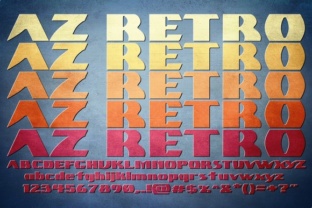
AZ Retro is a display typeface that draws heavily from the visual language of the 1970s. The letters are thick, rounded in places, and often feature slight irregularities that mimic the feel of vintage print. This is not a subtle, neutral font. It is meant to be seen. The boldness of the letterforms makes it ideal for headlines, titles, and any situation where you need text to dominate a layout.
Several characteristics set AZ Retro apart from both standard serif and sans-serif fonts, as well as from other decorative or retro-inspired typefaces:
- Weight and Presence: The strokes are uniformly heavy, giving each character a solid, grounded appearance. This works well at large sizes but can become problematic at smaller scales.
- 70s Aesthetic: The design references specific trends from that decade, such as rounded curves, slightly condensed proportions, and a warm, approachable feel. It avoids the sharper, more geometric look of 80s retro fonts.
- Limited Character Set: Like many headline fonts, AZ Retro is often optimized for uppercase letters and a smaller set of punctuation. Extended text or detailed multilingual support may not be its strength.
- Display Use Only: This is a headline font, not a body text font. Attempting to use it for long paragraphs would compromise readability.
These traits make AZ Retro a strong choice for specific projects, but they also point to its limitations. Understanding those limitations is just as important as appreciating its visual appeal.
Comparing AZ Retro with Other Typeface Categories
To decide whether AZ Retro is right for your project, it helps to compare it with other common typeface categories. Each category serves a different purpose, and the best choice depends on your goals.
AZ Retro vs. Neutral Sans-Serif Fonts
Neutral sans-serif fonts like Helvetica, Arial, or Open Sans are designed for clarity and versatility. They work in body text, headlines, and interfaces. They are safe, readable, and widely supported. AZ Retro takes the opposite approach. It sacrifices versatility for personality. If your project needs to feel institutional, professional, or minimal, a neutral sans-serif is likely a better fit. If you want warmth, nostalgia, or a strong visual statement, AZ Retro offers something those fonts cannot deliver.
When to choose each:
- Neutral sans-serif: Corporate reports, long-form articles, UI design, international audiences.
- AZ Retro: Event posters, album covers, branding for retro-themed businesses, short headlines.
AZ Retro vs. Other Decorative or Retro Fonts
Not all retro fonts are the same. Many display fonts attempt to evoke a past era, but they vary widely in execution. Some are too literal, looking like clip art rather than a usable typeface. Others lack the weight and presence needed for headlines. AZ Retro stands out because it balances strong letterforms with a genuine connection to 70s design without becoming a caricature. However, other retro fonts may offer more versatility, such as including a wider range of weights, italics, or alternative characters.
Consider these differences:
- Some retro fonts are thin or have high-contrast strokes, which can look elegant but lose impact at small sizes. AZ Retro is consistently bold.
- Other fonts may offer more granularity, like multiple weights or condensed versions. AZ Retro is typically a single weight, which simplifies choice but limits variation within a single project.
If you need a full family with multiple weights and extended language support, you may need to look beyond AZ Retro. If you want a single, powerful headline option, it remains a strong candidate.
AZ Retro vs. Classic Serif Fonts
Serif fonts like Times New Roman, Garamond, or Georgia convey tradition, authority, and readability in long text. They are built for extended reading. AZ Retro is not. It is built for impact. Comparing them directly is like comparing a sports car to a sedan. Both get you somewhere, but they serve very different purposes. You would not set a novel in AZ Retro, just as you would not design a disco-themed poster in Garamond. The choice is not about which is better, but which is more appropriate for your audience and message.
Strengths of AZ Retro: Where It Shines
When you align the font with the right project, AZ Retro delivers results that few alternatives can match. Its strengths become clear in the following scenarios:
- High-Impact Headlines: The bold letterforms ensure that your message is seen immediately. This is useful for event titles, product names, or promotional banners.
- Retro and Nostalgia Branding: Businesses or campaigns that want to evoke a 70s or 70s-inspired feel can use AZ Retro to set the visual tone quickly. A vintage clothing store, a retro diner, or a music festival all benefit from this typeface.
- Posters and Flyers: Large-format print work is where display fonts excel. AZ Retro maintains its readability and visual interest at poster sizes, where many body fonts would appear weak or bland.
- Short, Memorable Phrases: Because the font is so distinctive, it works best for short strings of text. A single word or a short phrase becomes a visual logo in itself.
These are not hypothetical advantages. They are practical reasons why designers reach for AZ Retro when the project demands a strong, era-specific voice.
Tradeoffs and Limitations: When AZ Retro May Not Be the Right Choice
Every font has tradeoffs, and AZ Retro is no exception. Being aware of these limitations helps you avoid mismatches and frustration later in the design process.
Readability at Small Sizes
The bold, heavy strokes that make AZ Retro so effective at large sizes become a liability at smaller sizes. At 12 or 14 points, the letters can fill in, especially on screen or in low-resolution print. Details may be lost, and the text can appear as a heavy block rather than readable characters. If your project requires body text, captions, or small labels, AZ Retro is not a good candidate. You would be better served by a complementary body font that balances the retro headline.
Limited Versatility
AZ Retro is a single-purpose tool. It does one thing well, but it does not adapt to multiple roles within a design system. You cannot use it for everything. This means you need to pair it with a secondary font for supporting text. Some designers enjoy this challenge, but others prefer a more unified type system where one family handles all sizes and weights. If versatility is a priority, look for a typeface with a broader range of styles.
Era Specificity
The strong 70s influence is a feature, but it can also be a constraint. If your project is not meant to evoke that decade, AZ Retro may feel out of place. The letterforms carry cultural associations that cannot be ignored. Using a font that strongly signals a specific era can limit how timeless or flexible your design feels. For many projects, that is exactly the goal. For others, it becomes a visual distraction.
Potential Overuse
Because retro fonts are popular in certain niches, there is a risk that your design may look like many others. If you are working in a saturated market, such as music festivals or vintage apparel, a distinct typeface can help you stand out, but only if used with intention. Simply applying AZ Retro to a project does not guarantee originality. The font is a tool, not a shortcut.
Decision Factors: How to Choose Wisely
When evaluating whether AZ Retro fits your project, consider the following practical questions:
- What is the primary medium? If your work will appear mainly in large print or on screen at headline sizes, AZ Retro is a strong candidate. If it needs to be legible at small sizes, look elsewhere.
- What is the desired tone? If warmth, nostalgia, boldness, or a 70s aesthetic aligns with your message, AZ Retro supports that goal. If you need neutrality, professionalism, or modernity, consider a different typeface.
- How long is the text? Short headlines and titles are ideal. Longer text blocks will strain readability.
- Can you pair it effectively? If you have a complementary body font ready, AZ Retro can anchor the visual hierarchy. Without that pairing, the design may feel incomplete.
- Does the font match the audience? For audiences aged 20–50 who appreciate retro design, AZ Retro can feel familiar and appealing. For audiences that expect a more contemporary or minimal look, it may seem dated.
These are not rigid rules, but they provide a framework for making a more informed decision. The goal is not to find a universal font, but to find the right font for your specific context.
Practical Examples of AZ Retro in Use
Seeing how AZ Retro performs in real-world scenarios helps clarify its fit. Here are a few examples that illustrate both successful applications and potential missteps.
Successful Application: Music Festival Poster
A poster for a 70s-themed music festival needs an immediate visual hook. The headline, "SUMMER SOUL FEST," set in AZ Retro, reads as both nostalgic and energetic. The bold letters fill the top third of the poster. Below it, a neutral sans-serif lists the lineup and venue details. The contrast between the display font and the body text creates a clear hierarchy. The festival's identity feels cohesive and intentional.
Less Successful Application: Website Navigation Menu
A website using AZ Retro for its navigation menu would face serious usability issues. The bold, heavy letters at 16 pixels would appear cramped and difficult to read. Users may struggle to find the information they need. The font's strong personality could also clash with the interface elements. In this case, a standard sans-serif would improve clarity without sacrificing style elsewhere on the page.
Successful Application: Brand Logo
A small business selling vintage furniture uses AZ Retro for its logo. The font's weight and retro feel align with the brand's identity. The logo appears on signage, tags, and social media. Because the logo is short and used at large sizes, the font performs well without needing additional weights or styles. The business stands out in a market where many competitors use generic script or sans-serif logos.
Making the Final Decision
Choosing a typeface is not a matter of finding the single best option, but of matching the tool to the task. AZ Retro is a distinctive, well-executed headline font that brings a strong 70s feel to any project. Its bold letters and vintage character make it ideal for impactful headlines, retro branding, and short promotional text. However, its limited readability at small sizes, narrow versatility, and strong era specificity mean it is not a universal solution.
If your project calls for a powerful, nostalgic headline and you have a complementary body font ready, AZ Retro is worth serious consideration. If you need flexibility across multiple sizes and contexts, or if the retro look does not align with your message, you will likely find a better alternative among more neutral or versatile typefaces.
The best designers understand that every font has a role. AZ Retro plays its role exceptionally well, but it is not designed to play every role. By understanding its strengths, tradeoffs, and ideal use cases, you can decide with confidence whether it belongs in your next project.